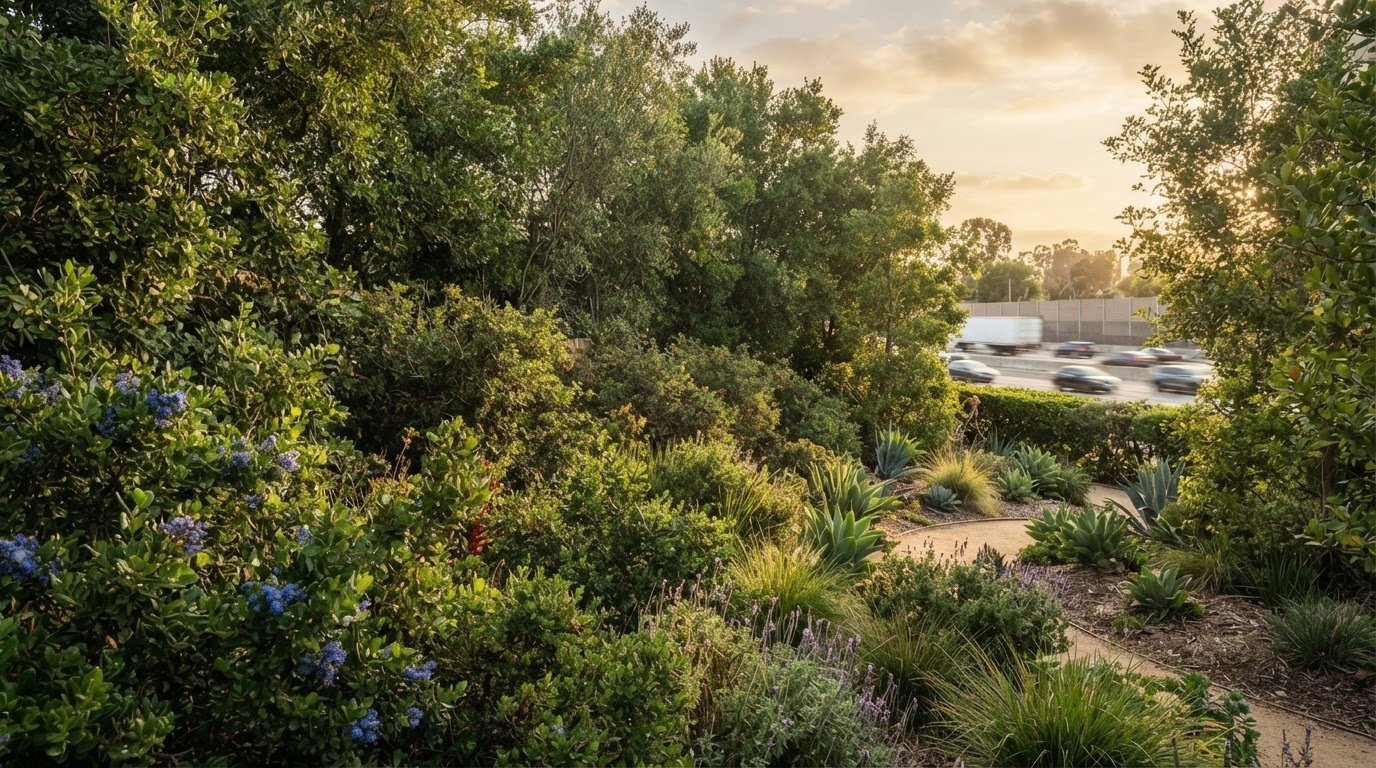
Sherman Oaks Sound Barrier Plants for Freeway Noise
Plants can soften freeway noise, but density and continuity matter more than a row of decorative trees. Sherman Oaks sound barrier plants for freeway noise work best as a dense buffer of trees and shrubs, with evergreen foliage providing coverage year-round. A 100-foot-wide planted buffer can reduce noise by 5 to 8 decibels.
Living near a freeway can make a peaceful outdoor space harder to enjoy. A thoughtfully designed planting from Nu Scape Designs won’t make traffic disappear, but it can create a more sheltered, inviting yard.
Learn how to limit gaps in a planting, why evergreen foliage matters, and how buffer width, landforms, and site conditions affect noise control. These factors clarify what plants can realistically contribute to a calmer home landscape.
Key Takeaways
- Choose trees and shrubs suited to the site, including its exposure to air pollution, so the planting can form a lasting buffer.
- Evergreen foliage keeps the screen present through the year, while thoughtful placement helps maintain coverage across seasons.
- Topography matters: an existing landform can strengthen a planted buffer, and a 12-foot-high landform with planting can reduce noise by 10 to 15 decibels.
- Plan for continuity, not just appearance. Gaps in a planted screen can limit its ability to soften freeway noise.
Dense planting to prevent gaps
A dense buffer of trees and shrubs helps close open paths through a planting. In Sherman Oaks, plant selection, mature size, and layout all influence how well the screen fills in.
Layered Planting for Gap Coverage
Layered planting combines shrubs and trees of different heights to close open sightlines. In a Sherman Oaks yard, overlapping crowns and low foliage help cover bare spaces. A single hedge may leave openings beneath branches or between plants as they grow. Place shrubs along the lower edge, then add taller trees behind them where space allows. This creates a fuller screen while leaving room for paths and outdoor use.
Drought-Tolerant Plant Choices
Drought-tolerant plants are suited to dry conditions and local site needs. Options for Sherman Oaks include toyon, manzanita, California lilac, and California coffeeberry. These Southern California plants can contribute to a layered garden. Before choosing, compare each plant’s mature width, sunlight needs, soil drainage, and available root space. Use compact shrubs to fill gaps and taller forms where the yard allows. A good match helps plants fill out without crowding windows, walls, or walkways.
Planting costs depend on the area, plant sizes, soil preparation, irrigation, and project scope. Nu Scape Designs provides estimates before work begins, with recommendations shaped around the property and project.
Loosen compacted soil, adding organic matter when its texture or drainage calls for it. Drip irrigation delivers water near root zones; adjust the schedule as plants establish and seasonal conditions change. Mulch helps conserve soil moisture, while selective pruning can preserve plant structure and screen coverage.
Evergreen plants for year-round noise control
Evergreen foliage remains through seasonal changes, helping maintain a planted screen year-round. In Sherman Oaks, that consistency can matter beside a freeway, where deciduous plants may lose their leaves for part of the year. A mix of evergreen shrubs and trees can provide visual coverage at different heights. Choose forms suited to the site’s sunlight, soil, and available space.
Consider how the screen looks and functions in every season. A dense evergreen hedge can provide a continuous backdrop, while taller evergreen trees add height behind it. Account for mature plant size so the arrangement doesn’t crowd windows, paths, or neighboring plantings. Plants also need to tolerate local conditions, including air pollution. A strong design balances year-round foliage with the practical realities of the yard.
Homeowners can pair plants with a fence or wall to create a more enclosed outdoor setting. Permit requirements depend on the proposed structure and its location; evergreen planting alone doesn’t determine which approvals apply. A living screen and a built feature serve different landscape roles, so consider how each affects sightlines, access, and the yard’s character.
For a more composed result, plan the planting as part of the whole outdoor space. A thoughtful landscape design can align evergreen screening with paths, seating, and existing features. That helps keep the buffer functional without making it feel like an isolated row of plants. In Sherman Oaks, year-round foliage brings lasting structure to the landscape, while careful placement keeps the design connected to everyday home life.
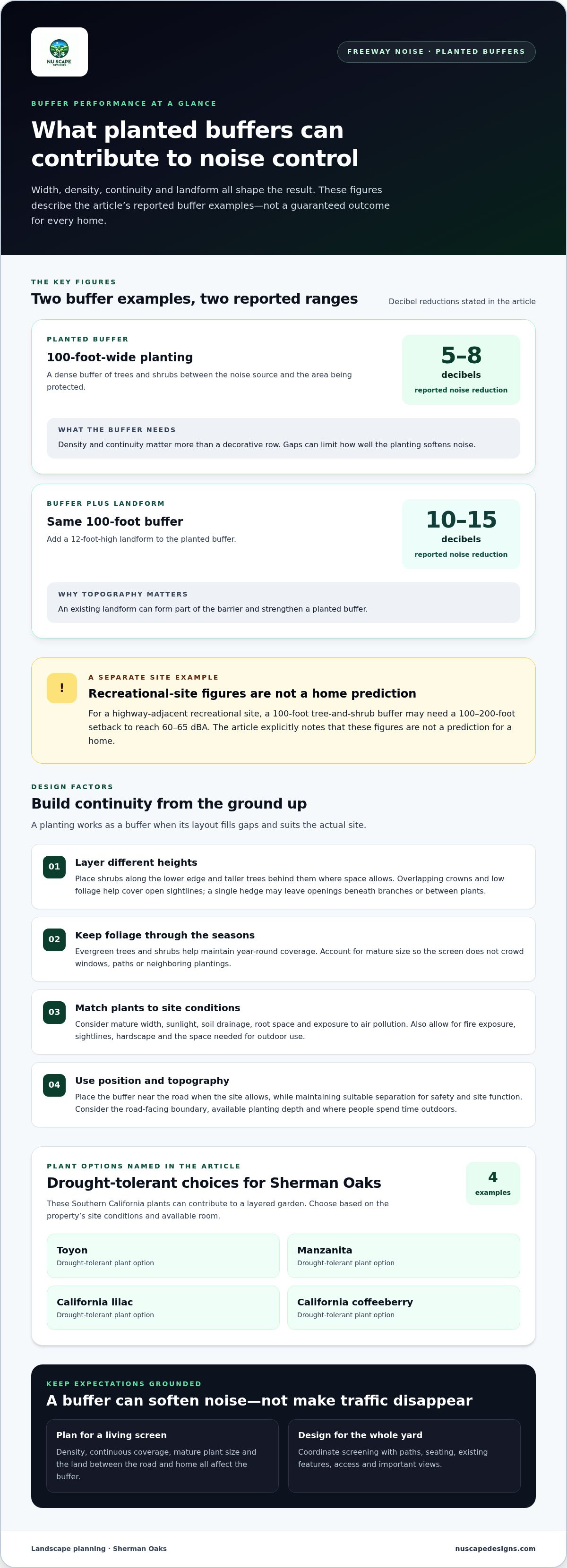
Noise reduction from planted buffers
Planted buffers work through their width, density, and position relative to freeway noise. Their effect also depends on the land between the road and the home.
Buffer Width and Setback
A buffer’s width is the planted area between the noise source and the space being protected. A 100-foot-wide planting can reduce noise by 5 to 8 decibels. With a 12-foot-high landform, that same buffer can reduce noise by 10 to 15 decibels. For a highway-adjacent recreational site, a 100-foot tree-and-shrub buffer may need 100 to 200 feet of setback to reach 60 to 65 dBA. Those recreational-site figures aren’t a prediction for a home.
Choosing Sherman Oaks sound barrier plants for freeway noise starts with the available planting depth and the outdoor areas you want to protect.
Placement Near Roads
Place a noise buffer near the road when the site allows, while maintaining suitable separation for safety and site function. The best position also depends on topography: an existing landform can form part of the barrier. Natural buffers are often less dense, and therefore less effective, than planted buffers. A design for Sherman Oaks sound barrier plants for freeway noise should account for road-facing boundaries, available space, and where residents spend time outdoors.
Local restrictions near Sherman Oaks property lines or sidewalks depend on location and project details; planting rules may differ from requirements for a fence or wall. Near freeways, air pollution can affect plant selection, while roots, fire exposure, and blocked sightlines are practical design considerations. Keep plants clear of important views and allow room around hardscape.
Nu Scape Designs: Custom Landscape Design Plans
Nu Scape Designs can turn sound-buffering ideas into a landscape plan shaped around your property. Custom Landscape Design Plans consider how planted areas fit alongside outdoor living spaces, paths, and other features, making the screen feel integrated rather than isolated.
Turn to Nu Scape Designs when you’re ready to coordinate plant choices, available space, and your yard’s overall character. Drought-Tolerant Garden Design can shape a water-wise planting approach, while pavers or an outdoor barbecue can be incorporated into the broader outdoor setting. Thoughtful planning brings these elements together around how you want to use your home’s exterior.
Contact Nu Scape Designs to discuss landscape plans for your property.
Shape a More Restful Outdoor Space
A yard that feels quieter begins with a design that considers more than the road-facing boundary. Sherman Oaks sound barrier plants for freeway noise can support a broader vision for relaxing, gathering, and moving through your outdoor space. Identify where conversation, dining, or quiet moments matter most. That perspective helps make the landscape feel intentional, with screening contributing to the atmosphere of the whole yard rather than standing apart from it.
Bring your priorities together before planning the next phase: the spaces you use most, the views you want to preserve, and the character you want the garden to express. Nu Scape Designs can turn those ideas into a considered landscape plan tailored to your home.
A thoughtful outdoor setting can make home feel more restorative, one carefully considered choice at a time.
Frequently Asked Questions
Which plants and trees best reduce freeway noise in Sherman Oaks?
Combine shrubs and trees in a continuous, multi-layer planting instead of relying on a single plant type. Toyon, manzanita, California lilac, and California coffeeberry are locally suited choices for a Sherman Oaks landscape. Arrange them according to mature size and available space, using lower shrubs to fill near-ground openings and taller trees to add height. Plants suited to the site are more likely to form a lasting screen.
How much noise reduction can landscaping provide compared with a solid sound barrier?
A 100-foot-wide planted buffer can reduce noise by 5 to 8 decibels; adding a 12-foot-high landform can increase the reduction to 10 to 15 decibels. A solid barrier works differently by blocking the direct sound path. The figures for planting describe particular buffer configurations, so they shouldn’t be treated as a direct performance comparison with every wall or fence.
What evergreen hedges grow well in Sherman Oaks’ climate and tolerate freeway pollution?
California coffeeberry, toyon, manzanita, and evergreen California lilac are options for Sherman Oaks planting. Match each plant to its exposure, soil, and available root space, prioritizing varieties suited to air pollution near freeway corridors. Evergreen foliage provides year-round coverage, but plant health and mature form still depend on choosing species that fit conditions along the proposed hedge line.
How tall and wide should a privacy hedge be to help screen freeway noise?
There isn’t one hedge dimension that fits every Sherman Oaks property. Set the hedge’s height and depth according to the freeway sightline, yard space, and the areas you want to screen. A 100-foot-wide planted buffer is a documented landscape configuration, not a standard residential hedge measurement. In a smaller yard, prioritize uninterrupted foliage and a layout that avoids open channels through the screen.
How far from a freeway should plants be installed for the best noise reduction?
Place the planted buffer close to the noise source when site conditions allow, while retaining appropriate separation for safety and site function. Topography and existing landforms also influence placement. A 100-to-200-foot setback applies to a highway-adjacent recreational-site example, not a universal distance for Sherman Oaks homes. Residential layouts must account for property boundaries, usable yard space, and the buffer’s position relative to outdoor living areas.