Sherman Oaks Modern Farmhouse Front Yard Examples for Curb Appeal
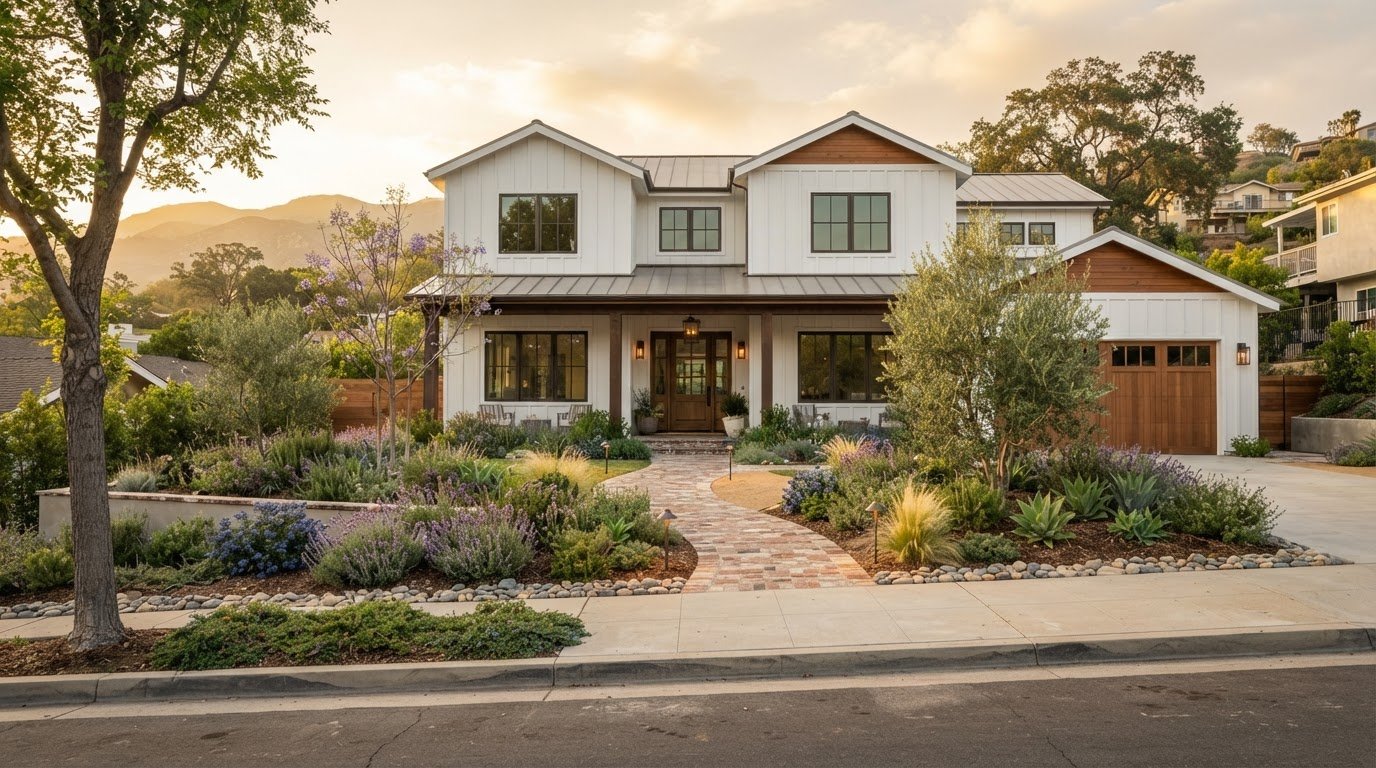
A modern farmhouse front yard feels inviting when crisp architecture meets soft, layered planting. In Sherman Oaks, a modern farmhouse front yard design can build curb appeal with seasonal color, grouped shrubs, and a brick or gravel path that creates a clear, welcoming approach.
It’s easy to focus on the façade alone, but the landscape shapes the first impression too, from the way a path guides visitors to the greenery that frames the entry. This article explores how those elements work together, with practical examples of layered landscaping and seasonal plantings suited to a polished farmhouse look. You’ll see how texture, color, and circulation can make the front yard feel both composed and warm, while keeping the home’s character at the center.
Key Takeaways
- Layer shrubs, groundcover, and a focal tree to give the front yard depth while keeping the farmhouse facade visually balanced.
- Use seasonal plantings to bring color and changing texture to the entry without relying on a crowded garden bed.
- Choose brick for a more structured, classic approach or gravel for a softer, relaxed path, then coordinate the material with the home’s exterior.
- Plan planting beds and pathways together so the route to the front door feels clear, welcoming, and naturally connected to the landscape.
Layered landscaping and seasonal plantings
Layered planting adds depth to a modern farmhouse front yard, softening clean lines without hiding the facade. In a Sherman Oaks modern farmhouse front yard design, combine low groundcover, flowering shrubs, and a carefully placed ornamental tree. Seasonal color adds interest near the entry while the home remains the focal point.
For privacy, use low walls, fences, hedges, and frontage plants as measured screens, not solid barriers. The U.S. Environmental Protection Agency lists front yards, frontage plants and trees, low walls, fences, and hedges as private-property buffering features.
For a visual example of farmhouse planting and composition, watch “Front Yard Landscaping Ideas Farmhouse” by Design Exterior:
For heat, drought, and wildfire considerations, choose plants suited to the local climate and leave open space between groupings. Drought-tolerant plants and drip irrigation can support water-wise planting. Adapt the layout to sun exposure, soil, and the home’s surroundings.
One farmhouse landscape project by Nu Scape Designs used colorful shrubs for blooms and seasonal interest, with less maintenance than a typical perennial garden. The designer also placed a mid-sized ornamental tree southwest of the patio for shade. These choices show how flowering color and a purposeful canopy can add character without filling every open area.
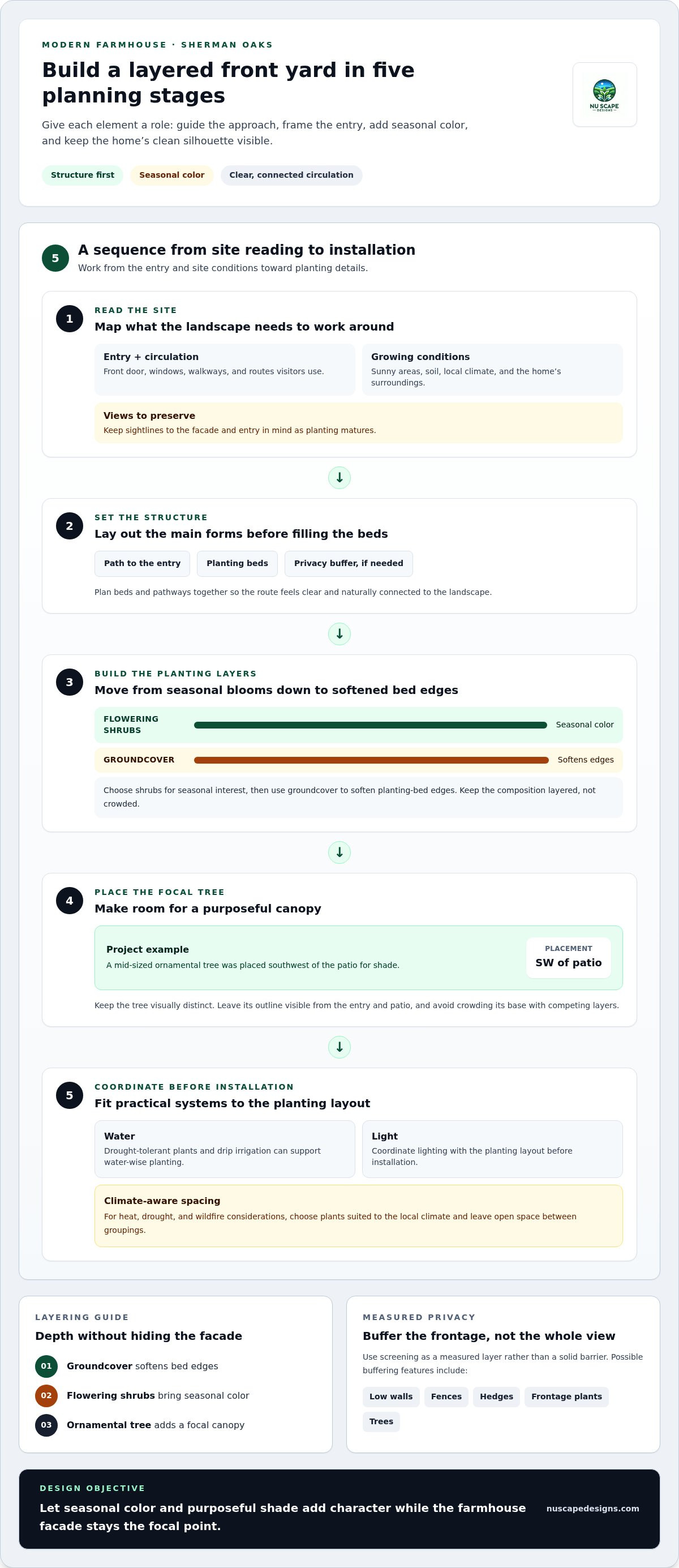
Plan the landscape in a clear sequence:
- Map the entry, windows, walkways, sunny areas, and the views you want to preserve.
- Set the main structure with paths, planting beds, and any privacy buffer.
- Choose shrubs for seasonal color, then add groundcover to soften bed edges.
- Place a focal tree where its eventual canopy supports shade without obscuring the house.
- Coordinate irrigation and lighting with the planting layout before installation.
A layered plan connects appearance with practical use by giving each plant a role, from framing the front door to adding seasonal blooms. In Sherman Oaks, thoughtful spacing also helps preserve the farmhouse facade’s clean silhouette as the garden matures.
In the farmhouse project, the landscape designer placed a mid-sized ornamental tree southwest of the patio for shade. Keep the tree visually distinct and avoid crowding its base with competing layers. Seasonal shrubs can frame the planting area while leaving the tree’s outline visible from the entry and patio.
As the garden develops, review how the tree relates to open space, paths, and the facade rather than adding plants simply to fill gaps. A restrained understory can connect the tree to lower groundcover without obscuring its role. This approach keeps shade, seasonal color, and the farmhouse’s clean composition working together, while allowing the planting to feel layered rather than crowded.
Brick and gravel pathways
A front path connects the sidewalk to the entry and sets the tone for arrival. In a Sherman Oaks modern farmhouse front yard, choose a material that relates to the home’s exterior and gives visitors a clear route. Brick creates a tailored, rhythmic surface; gravel feels softer and more informal beside a relaxed garden edge.
Choose brick for a defined approach that relates visually to porch steps or other structured details. A repeating pattern can lead the eye toward the front door without competing with the facade. Gravel can suit a quieter route, such as a path between the entry and a side gate. A contained edge helps keep loose stone in place.
Trace the route from sidewalk to door, noting gates, steps, driveway crossings, and natural turning points. Keep the path clear of planting beds, and avoid curves without a practical purpose. A gentle bend can reveal the entrance gradually; a direct line often makes a compact front yard easier to navigate.
Use these design decisions to refine the approach:
- Pattern: Align brick courses with the entry for a composed visual transition.
- Texture: Set gravel beside a restrained border for a softer contrast.
- Edges: Define the path so its surface remains distinct from nearby soil.
- Connections: Link the front door, driveway, and side gate with clear routes.
Consider a narrow Sherman Oaks entry with a prominent front door and limited planting space. A straight brick walk can connect the sidewalk to the porch, while a simple border separates it from the garden. This creates a welcoming, easy-to-read approach without overwhelming the facade.
On a wider property, a gravel path may connect the entry to a side-yard gate, providing a practical route and a softer garden transition. Choose the material to suit the house, expected foot traffic, and adjacent surfaces. Coordinating the walkway and driveway helps the arrival feel unified.
Thoughtful placement can bring paths, planting, and outdoor spaces into a cohesive whole. Explore a whole-yard landscape design approach when you want those elements to feel intentionally connected.
Nu Scape Designs: Custom Landscape Design Plans
Nu Scape Designs creates Custom Landscape Design Plans that bring planting, paths, and architecture together. A tailored plan can help you refine the entry, choose seasonal layers, and coordinate a path with the facade before installation.
For Sherman Oaks homes, Drought-Tolerant Garden Design can shape a water-wise planting palette suited to Southern California’s climate. Pavers can define a route to the front door, while an outdoor barbecue can connect the front-yard aesthetic with a broader outdoor living plan. Choose features according to how you want the property to look and function.
Share your landscape goals with Nu Scape Designs, or visit nuscapedesigns.com to explore the next step.
Shape a Front Yard That Feels Like Home
A landscape can do more than frame the house. It can create a calmer arrival, express your home’s character, and make the transition from street to front door feel intentional. A Sherman Oaks modern farmhouse front yard design starts with choices suited to the property and how you want to use it, not a template copied from another home.
Nu Scape Designs can translate your vision into Custom Landscape Design Plans, with Drought-Tolerant Garden Design and Pavers as parts of the plan. A considered starting point helps shape a cohesive, personal front yard.
Make your home’s first impression a thoughtful expression of the life you want to welcome in.
Frequently Asked Questions
What are popular modern farmhouse front yard designs in Sherman Oaks?
Popular designs pair crisp entry details with relaxed, structured planting. A Sherman Oaks modern farmhouse front yard design might use a simple planting palette, a framed porch, and low borders that leave windows and architectural details visible. For a distinctive touch, echo one exterior material near the entry, such as wood-toned accents repeated in a gate or planter, rather than mixing many finishes.
Which drought-tolerant plants thrive in Sherman Oaks and Los Angeles?
California sagebrush, Cleveland sage, toyon, deer grass, and California lilac are drought-tolerant options for Los Angeles-area gardens. Combine evergreen structure, ornamental grasses, and flowering plants for contrast across the beds. In Sherman Oaks and nearby Ventura, Oxnard, Westlake Village, Calabasas, Malibu, North Simi Valley, Lake Sherwood, Agoura Hills, and Porter Ranch, place plants according to each yard’s sun and soil conditions.
What materials suit a modern farmhouse front walkway and driveway in Southern California?
Brick, concrete, and pavers can suit walkways, while a driveway needs a surface designed for vehicle loads. Choose colors that complement the home, then use a coordinated edge or border to define the transition between the drive and garden. Repeating a walkway material in a small entry detail can unify the approach while keeping the driveway practical and visually restrained.