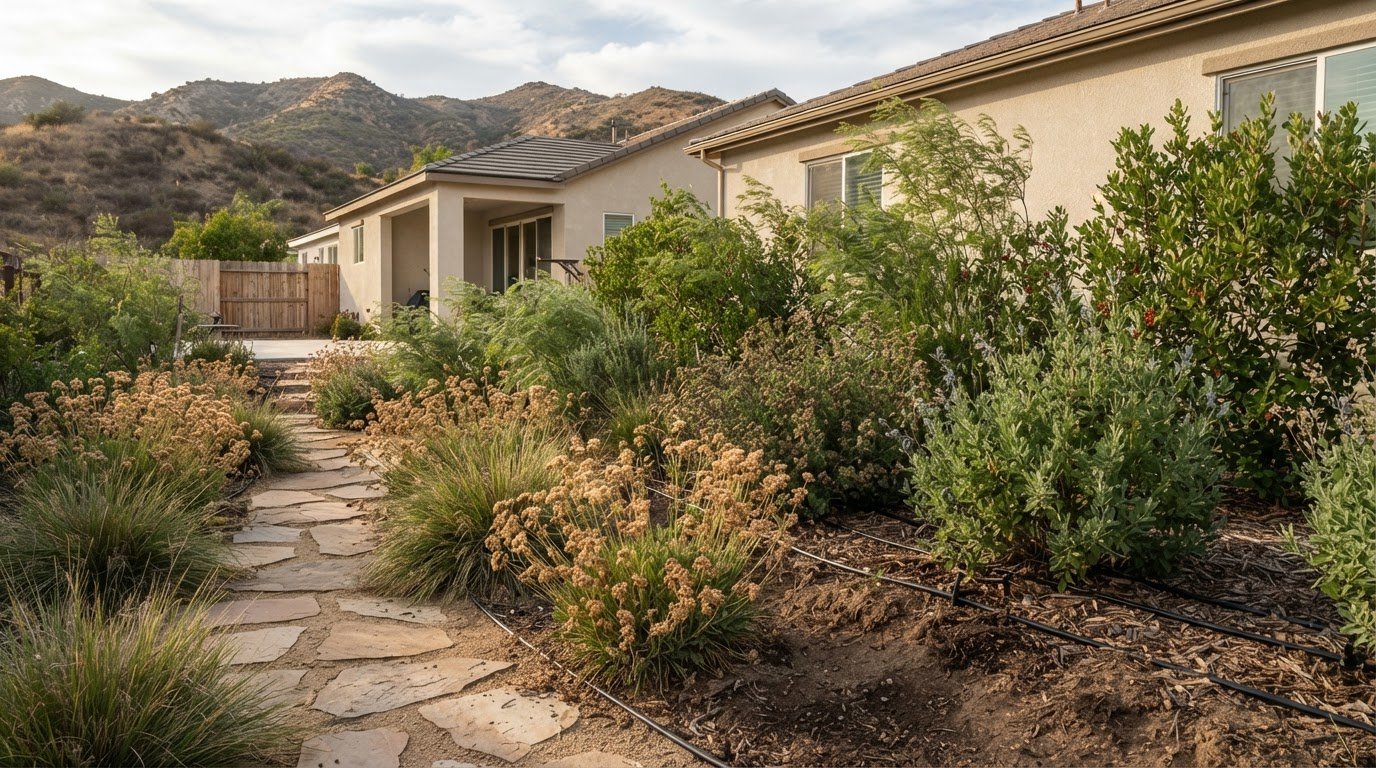
Porter Ranch wind-tolerant landscape choices for plants, soil and watering
Strong gusts can reshape a garden, and winds in Porter Ranch have been clocked at 70 mph. A Porter Ranch high-wind-tolerant landscape plan pairs climate-fit plants in layered wind buffers with soil that drains well and holds moisture near roots. The goal isn’t to stop every gust, but to create a landscape that can better withstand exposure while remaining composed and inviting.
A Porter Ranch high wind tolerant landscape plan should balance resilient planting with a garden that feels beautiful, not merely built for survival. The right choices depend on how wind moves through your property, how quickly the soil dries, and where plants can establish comfortably. Plan for suitable trees, shrubs, and groundcovers, manage drainage without sacrificing moisture, and water deeply so roots can settle in. Layered planting can soften wind and help protect soil, creating an outdoor space that becomes more cohesive over time.
Key Takeaways
- Choose plants suited to Porter Ranch’s climate, then combine varied heights and forms to create a more resilient planting.
- Balance soil drainage with moisture retention so roots receive water without leaving the ground overly wet.
- Water slowly and deeply during establishment, adjusting as plants mature and local soil and weather conditions change.
- Custom Landscape Design Plans from Nu Scape Designs can bring plant selection, water-wise planning, and outdoor living features together in a cohesive design.
1. Climate-fit plant selection for California and hot inland regions
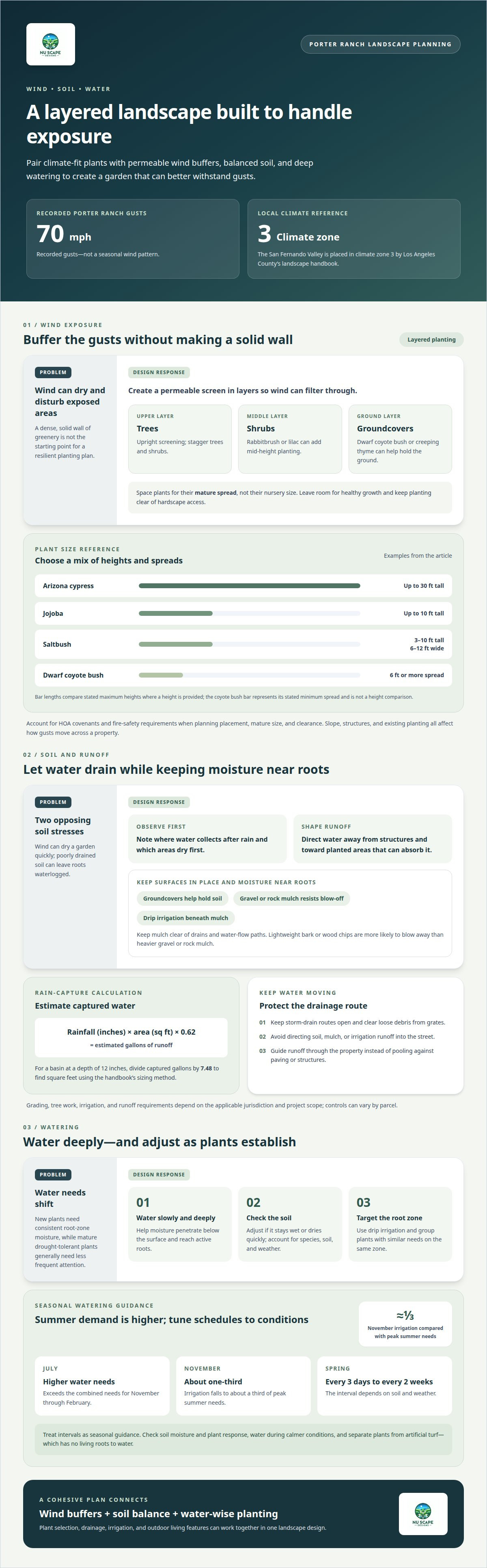
Los Angeles County’s landscape handbook places the San Fernando Valley in climate zone 3. Porter Ranch winds have been clocked at 70 mph, so choose plants for local heat and exposure. A high-wind-tolerant landscape plan for Porter Ranch starts with resilient species, not a dense wall of greenery.
For upright screening, Arizona cypress can grow to 30 feet, while jojoba can reach 10 feet. Saltbush offers a lower, spreading option, growing 3-10 feet high and 6-12 feet wide. Dwarf coyote bush spreads 6 feet or more as an evergreen groundcover. These examples give you a range of heights for a natural wind buffer.
Build planting in layers: use trees as an upper screen, shrubs such as rabbitbrush or lilac in the middle, and groundcover below. Rabbitbrush can suit exposed areas, while creeping thyme can help limit soil and mulch blow-off. Choose species adapted to local conditions, including drought, and check their mature sizes before planting.
Space plants according to their mature spread, not their compact nursery size. Stagger trees and shrubs to create a permeable screen that lets wind filter through. As plants grow, their foliage can shade the soil and make the outdoor space feel more inviting. Keep planting clear of hardscape access and allow room for healthy growth.
HOA covenants and fire-safety requirements can affect plant placement, mature size, and clearance. Account for these constraints when planning beds, screens, and trees.
Winds in Porter Ranch have been clocked at 70 mph. That figure describes recorded gusts, not a seasonal pattern; the strongest seasonal winds aren’t identified here. Design for exposure across the property, where slope, structures, and planting affect how gusts move.
Recorded gusts in Porter Ranch have reached 70 mph.
2. Soil drainage and moisture retention
Wind can dry a garden quickly, while poorly drained soil can leave roots waterlogged. Assess both conditions before planting: note where water collects after rain and which parts of the backyard dry first. Shape the grade to direct runoff away from structures and toward planted areas that can absorb it. Healthy soil balances drainage with moisture retention.
For a rain-capture area, estimate runoff using rainfall in inches × area in square feet × 0.62 to calculate gallons. For example, the handbook’s rain-garden sizing method divides captured gallons by 7.48 to find square feet at a depth of 12 inches. These calculations help match a planted basin to expected water volume.
Choose groundcovers that help hold soil in place, then secure exposed surfaces with gravel or rock mulch. These heavier materials are less likely to blow away than lightweight bark or wood chips. Install drip irrigation beneath the mulch to deliver water near roots and help the soil surface retain moisture. Keep mulch clear of drains and water flow paths.
Keep storm drain routes open. Clear loose debris from grates and avoid directing soil, mulch, or irrigation runoff into the street. During installation, maintain a clear route for water to move through the property instead of pooling against paving or structures. Adjust grading gently so runoff reaches planted areas without washing soil away.
For a Porter Ranch project, the applicable jurisdiction and project scope determine requirements for grading, tree work, irrigation, and runoff. Include these considerations in the landscape plan before excavation or installation, since controls can vary by parcel.
A considered landscape design approach can coordinate drainage, drought-tolerant planting, and hardscape so the outdoor setting feels cohesive as well as functional.
3. Deep watering during establishment and after maturity
New plants need consistent moisture around their roots while establishing in Porter Ranch soil. Apply water slowly so it penetrates below the surface rather than running over compacted ground. Drip irrigation directs moisture to planted areas and can limit losses from wind and evaporation. Check the soil around each species, then adjust irrigation if it stays wet or dries quickly.
Watering needs change with the season. July plant-water requirements exceed the combined needs for November through February, while November irrigation falls to about a third of peak summer needs. Spring schedules can range from once every three days to once every two weeks, depending on soil and weather. Use these intervals as seasonal guidance, then assess soil moisture and plant response.
Once established, mature drought-tolerant plants generally need less frequent attention than newly planted ones. Water deeply when conditions call for it, allowing moisture to reach active roots. Group plants with similar needs on the same irrigation zone, and separate them from artificial turf, which has no living roots to water. This landscape design approach makes adjustments more precise and focuses water where it is needed.
Wind affects irrigation timing as well as plant demand. Avoid watering during windy periods, when spray can drift away from the garden and onto streets or hardscape. Run drip systems during calmer conditions, then check whether water reaches the root zone. Seasonal adjustments and soil checks help planted areas perform with minimal waste.
Nu Scape Designs: Custom Landscape Design Plans
Nu Scape Designs creates Custom Landscape Design Plans for homeowners who want to account for wind, soil, and watering in a cohesive outdoor setting. Its Drought-Tolerant Garden Design can incorporate climate-conscious planting, while Pavers and an Outdoor barbecue can help shape areas for gathering and everyday use.
Consider a custom plan when balancing sheltered planting, water-wise choices, and hardscape, or when separate ideas need a clear design direction. A coordinated plan connects practical decisions with the atmosphere you want your garden to create.
Explore a tailored direction for your outdoor space by visiting nuscapedesigns.com.
Shape the Outdoor Space You Want to Live In
A high-wind-tolerant landscape plan for Porter Ranch can do more than respond to exposure. It can reflect how you want to live outdoors, whether that means quiet mornings among planted areas or an inviting setting for shared meals. Before making design decisions, picture the moments your outdoor space should support. That vision gives practical choices a clear purpose.
As you refine your vision, consider how each area connects, from arrival to gathering spaces and quieter corners. Think about the atmosphere you want, the views you want to preserve, and how the landscape should complement your home. These priorities can guide a cohesive design rather than a collection of separate decisions. Bring your vision to Nu Scape Designs to explore a direction suited to your property.
Your outdoor space can become a place you’re glad to return to.
Frequently Asked Questions
Which trees and shrubs are drought-tolerant and wind-tolerant for Porter Ranch's climate?
Wind resistance and drought tolerance are separate traits, so assess both when selecting plants. Shumard oak, bald cypress, and tea olive are listed as wind-resistant landscape trees. For Porter Ranch, pair wind-suited choices with plants matched to local heat, soil, and water availability. Consider mature size and root space before placing trees near paving or buildings.
What native California plants work well in a high-wind Porter Ranch landscape?
Rabbitbrush and coyote bush offer regionally grounded options for a Porter Ranch planting palette. Saltbush can also add substantial shrub form to exposed areas. Combine these with other climate-adapted plants suited to your site’s sun and soil. Check each plant’s mature spread against nearby paths, walls, and windows so the garden remains functional as it grows.
How should trees be selected, spaced, staked, and pruned for wind resistance?
Choose trees with a mature form suited to the planting location, and allow room for their canopy and roots. Space them so they can develop without crowding structures or one another. Stake a newly planted tree only if it needs support, using ties that do not bind the trunk. Prune damaged or crossing branches selectively, preserving a balanced canopy instead of shearing it into a dense surface.
What landscape layout, windbreak designs, and plant spacing reduce wind damage in Porter Ranch?
Map exposed corners and wind corridors before choosing planting locations. Place a permeable buffer across the gust path while keeping doors, paths, and gathering areas accessible. Offset gaps between plant groups so openings do not create a direct channel toward a patio. In Porter Ranch, adapt the layout to your home’s shape and slope rather than assuming wind reaches every part of the yard equally.
What are the irrigation needs and water-wise landscaping requirements for Porter Ranch?
Irrigation needs depend on plant species, soil drainage, exposure, and season. Group plants with similar water needs so each irrigation zone can be adjusted without overwatering neighboring beds. Drip irrigation suits targeted root-zone delivery, while regular soil checks help guide seasonal changes. Water-wise planting should match the property’s conditions; no single schedule fits every Porter Ranch garden.