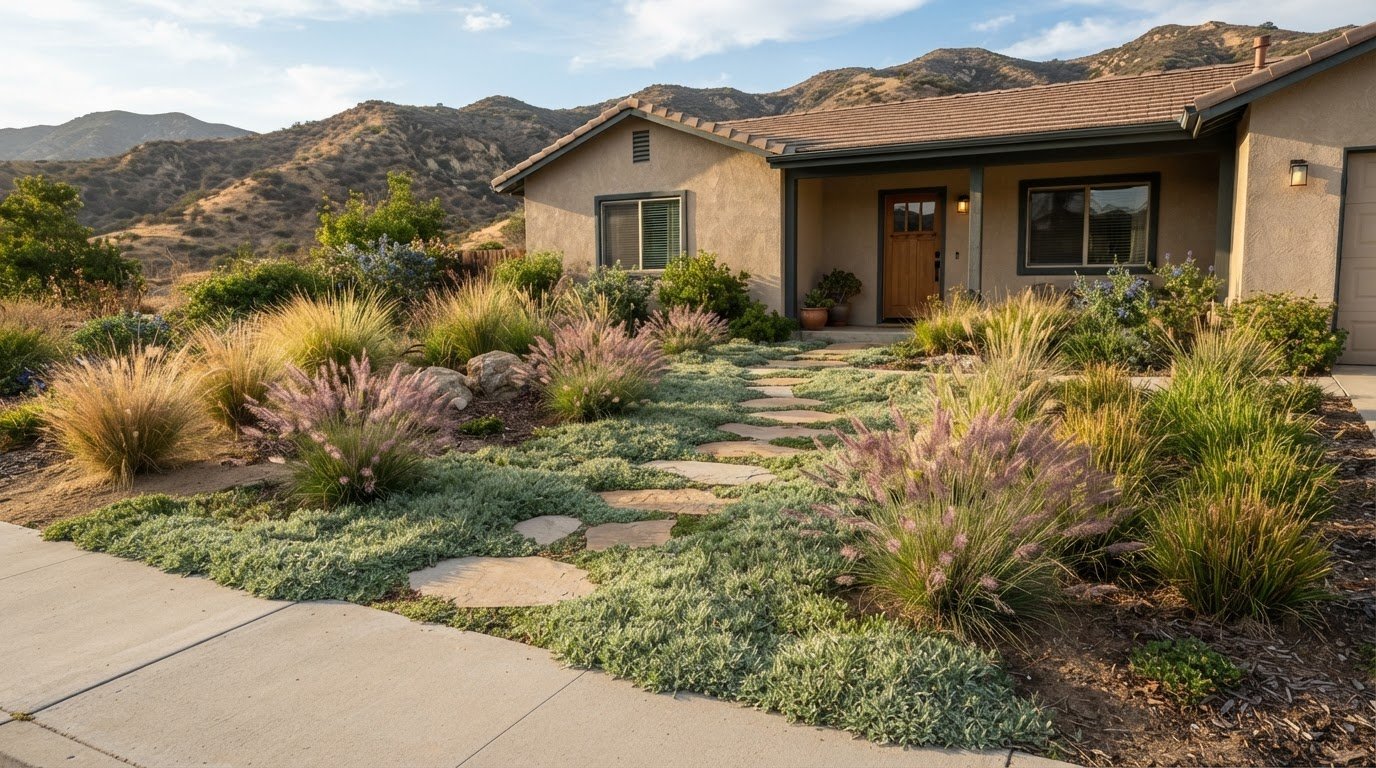
North Simi Valley Low-Water Lawn Alternatives for Different Yards
The best low-water lawn may not be a lawn at all. The right North Simi Valley low water lawn alternatives depend on how you use the space: purple three-awn offers a sculptural, low-water look, sedges and ornamental grasses add texture, and groundcovers can suit areas with occasional foot traffic. Established purple three-awn may need watering once or twice a month in summer to keep its foliage green.
A traditional lawn can feel inviting, but it is not the only way to create a comfortable, beautiful yard. Choose plants to suit your sunlight, water needs, and daily use, whether you want an open area to relax in or a softer garden path. Here is how sedges, grasses, and groundcovers compare, and how to match them to your North Simi Valley yard.
Key Takeaways
- Compare sedges and ornamental grasses by the look and level of summer greenery you want, while keeping outdoor water use in perspective.
- Choose groundcovers according to how often people will walk across them; some are better suited to light, occasional traffic than everyday activity.
- Use sunlight, foot traffic, and your preferred watering routine to narrow the options before selecting plants for each part of the yard.
- Custom landscape planning can bring plant choices, paths, and outdoor living areas together in a cohesive, water-wise design.
1. Drought-tolerant sedges and ornamental grasses
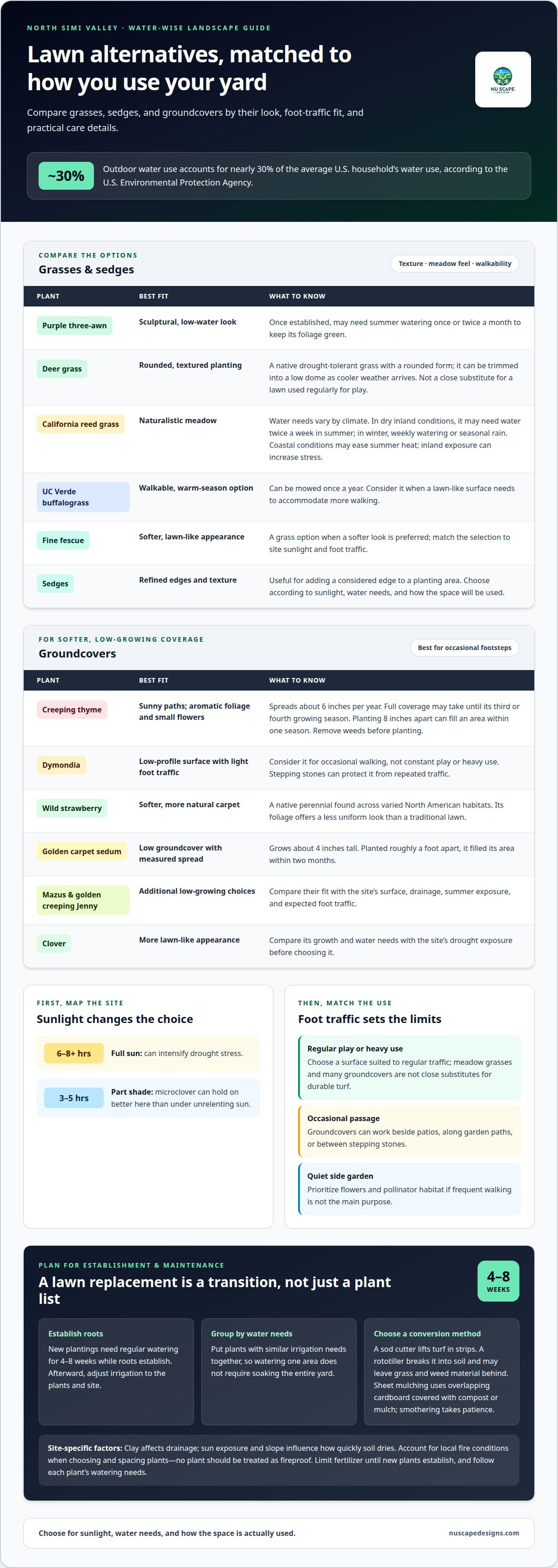
In North Simi Valley, consider native deer grass and purple three-awn as drought-tolerant lawn alternatives. Established purple three-awn may need summer watering once or twice a month to keep its foliage green. Deer grass has a rounded form and can be trimmed into a low dome as cooler weather arrives. These grasses bring movement and texture, but they are not a close substitute for a lawn used regularly for play.
California reed grass suits a naturalistic meadow, though its watering needs shift with climate. In dry inland conditions, it may need water twice a week in summer; in winter, it can be watered weekly or receive seasonal rain. Coastal conditions may ease summer heat, while inland exposure can increase stress. Outdoor water use accounts for nearly 30% of the average U.S. household’s water use, according to the U.S. Environmental Protection Agency.
For a walkable, warm-season option, UC Verde buffalograss can be mowed once a year. Fine fescue offers a softer, lawn-like appearance, while sedges can create a refined edge. Choose plants according to sunlight and foot traffic. Native groundcovers such as wild strawberry may suit planted areas, while thyme and Dymondia offer low-growing alternatives. Do not assume every groundcover tolerates frequent walking.
To remove existing grass, a sod cutter lifts turf in strips, while a rototiller breaks it into the soil and may leave grass and weed material behind. For sheet mulching, overlap cardboard and cover it with compost or mulch. Smothering takes patience, so plan the conversion before planting. Limit fertilizer until new plants establish, and follow each plant’s watering needs.
Rebate availability in Simi Valley or Ventura County depends on active program terms and project eligibility. Confirm current requirements with the administering local program before budgeting. Nurseries stock California-adapted plants, and local landscape advice can help match selections to site conditions.
2. Groundcovers for occasional foot traffic
Groundcovers are among the North Simi Valley low water lawn alternatives best suited to occasional footsteps, not constant play or heavy use. Place them beside patios, along garden paths, or between stepping stones. Before planting, match each plant to the surface, drainage, and summer exposure. This creates a living carpet that softens a garden without asking it to perform like durable turf.
Creeping thyme brings aromatic foliage and small flowers, making it a sensory choice for sunny paths. Thyme spreads about 6 inches per year, and full coverage may take until its third or fourth growing season. Planting creeping thyme 8 inches apart can fill an area within one season. Remove weeds before planting, then give young plants room to knit together as they grow.
For a garden with light foot traffic, Dymondia is one North Simi Valley low water lawn alternative to consider for a low-profile surface. Stepping stones can protect it from repeated traffic. Wild strawberry offers a different look: it is a perennial native plant found across varied North American habitats. Its foliage creates a softer, more natural carpet than a uniform lawn.
Other choices bring distinct textures. Golden carpet sedum grows about 4 inches tall; planted roughly a foot apart, it filled its area within two months. Mazus and golden creeping Jenny offer low-growing groundcover options. Clover may suit a more lawn-like appearance, but compare its growth and water needs with the site’s drought exposure. A drought-tolerant garden design can coordinate groundcovers, paths, and planting beds around how you use the yard.
3. Choosing lawn alternatives by use, sunlight, and water needs
Start with the yard’s purpose. A play area needs a surface that can handle regular traffic, while a quiet side garden can prioritize flowers and pollinator habitat. The best North Simi Valley low water lawn alternatives depend on this distinction: a meadow suits occasional passage better than daily recreation, while a walkable lawn substitute can suit more frequent use.
Map sunlight before choosing plants. Full sun receiving 6-8+ hours can intensify drought stress; areas with 3-5 hours of sun are part shade. Microclover can hold on better in part shade than under unrelenting sun. Group plants with similar irrigation needs, so watering one area doesn’t require soaking the entire yard.
For another way to compare North Simi Valley low water lawn alternatives, weigh establishment and seasonal care alongside mature water needs. New plantings need regular watering for 4-8 weeks while roots establish. Afterward, adjust irrigation to the plants and site. Native meadow plantings generally need minimal maintenance, usually annual care, and tolerate occasional foot traffic.
Heat, clay soil, and wildfire considerations call for site-specific choices. Clay affects drainage, while sun exposure and slope influence how quickly soil dries. Account for local fire conditions when choosing and spacing plants; no plant should be treated as fireproof. For dogs and children, distinguish walkable surfaces from planting beds, and do not assume any plant is safe to eat. Local requirements depend on the project’s scope, including planting, grading, drainage, irrigation, or hardscape. A thoughtful design brings these conditions together.
Nu Scape Designs: Water features
Nu Scape Designs can shape a lawn replacement into a cohesive outdoor setting, with plantings and gathering areas planned around how you use the yard. Custom Landscape Design Plans and Drought-Tolerant Garden Design can bring your preferred groundcovers or grasses into a considered layout. Pavers can define paths and seating areas, while an outdoor barbecue can make the garden more inviting for shared meals.
A water feature is an optional focal point, not a lawn substitute or a water-saving measure on its own. Its place in the design should complement your planting choices and the atmosphere you want for the yard. To shape these ideas into a personalized outdoor space, contact Nu Scape Designs to discuss your project.
Shape a yard that feels like yours
Picture how you want your outdoor space to feel across the seasons: open and welcoming, softly layered, or arranged for quiet retreat. North Simi Valley low-water lawn alternatives work best as part of a larger vision, with each planted area and pathway serving a clear purpose. A thoughtful layout makes the transition feel intentional, rather than like a simple swap of one surface for another.
Let your daily routines guide the design. Consider where you gather, where you walk, and which corners would benefit from a calmer, more natural character. These choices provide a practical starting point for refining your landscape.
Your yard can become a more personal, inviting extension of your home.
Frequently Asked Questions
How much water do lawn alternatives use compared with conventional turf in Ventura County?
Water use varies by plant, site, and irrigation approach, so there is no single figure for every alternative. Drought-tolerant groundcovers and native plantings can use less water than conventional turf once established, but newly planted areas need regular irrigation as roots develop. In Ventura County, grouping plants with similar water needs helps direct irrigation efficiently and avoids watering drought-adapted areas like thirsty turf.
What are the installation and annual maintenance costs of native lawns, gravel, and artificial turf in Simi Valley?
Costs depend on the area’s size, site preparation, materials, access, and design details. Installation and annual upkeep also vary: plantings may need establishment care and seasonal trimming, gravel may require weed control and replenishment, and artificial turf may need cleaning. Project pricing depends on the scope and details, and the estimate reflects the design, materials, and site conditions.
How do I remove an existing lawn and prepare soil for a water-wise landscape in Simi Valley?
After removing the lawn, clear leftover roots and debris, then assess drainage and compacted areas before planting. Loosen soil where needed and shape the surface so water moves toward planted areas instead of pooling beside paths or structures. Plan irrigation zones around plants with similar water needs, then lay out plants and hardscape before installation to check spacing and access.
Which low-water lawn alternatives are safe for dogs and children?
No plants are identified here as safe for dogs or children. Distinguish walkable surfaces from planting beds, and do not assume any plant is safe to eat.