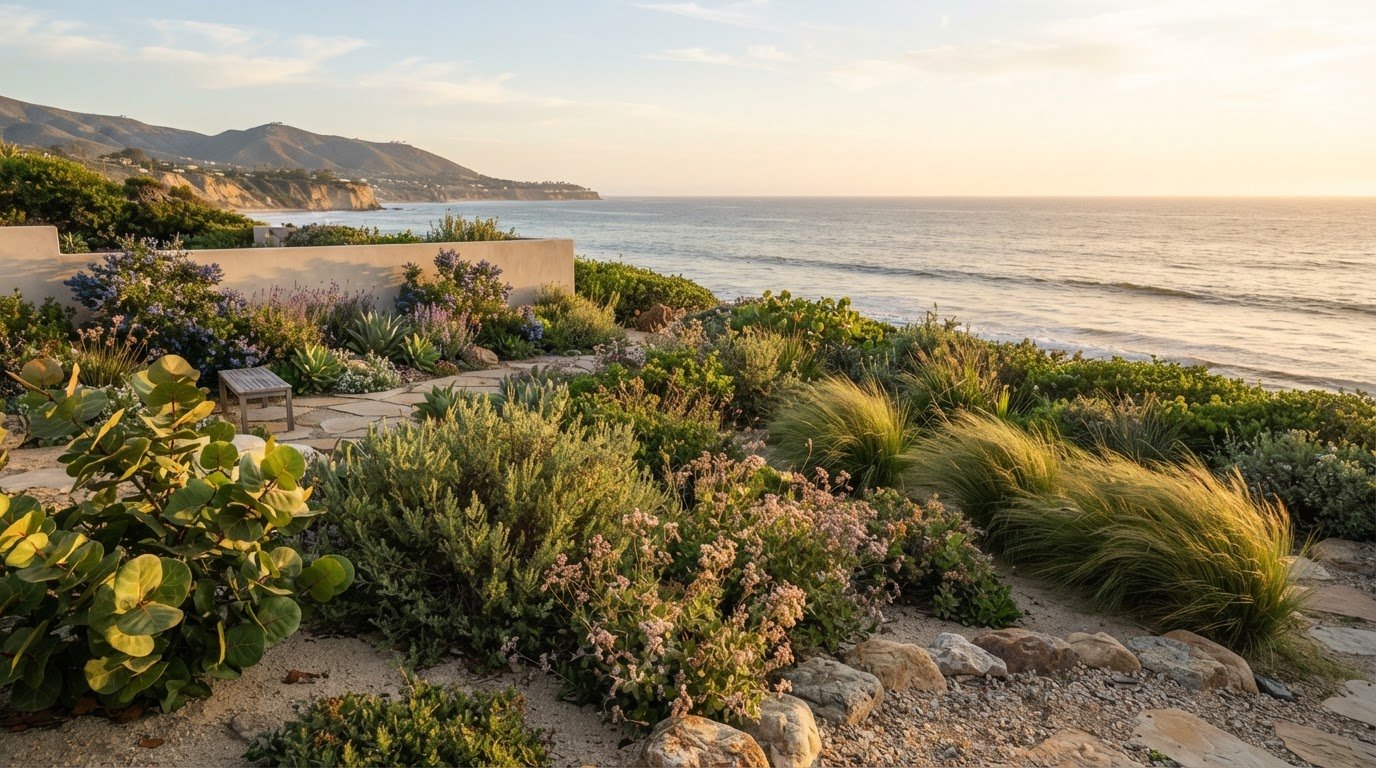
Malibu Sea Salt Tolerant Plants for Oceanfront Gardens
The toughest oceanfront plants don’t thrive by drinking seawater. Malibu sea salt tolerant plants for oceanfront homes are selected to withstand salt spray, not to grow on salt water; even coastal plants need fresh water to thrive. The first 500 feet from shore typically face the most severe salt exposure, where spray can burn or kill sensitive plants and storm surge can bring saltwater into gardens.
That coastal challenge is real, but a thoughtful planting plan can help create a garden that feels composed and connected to the ocean. Learn how salt tolerance works, why plants still need fresh water, and how to compare highly, moderately, and slightly salt-tolerant choices according to their exposure needs. We’ll also explore how planting zones, shelter, and placement shape a resilient Malibu landscape.
Key Takeaways
- Assess wind, sandy soil, and direct coastal exposure before choosing plants; these conditions shape which choices are likely to thrive.
- Use shelter from buildings or taller planting to create gentler spaces for less salt-tolerant shrubs.
- Compare plants by high, moderate, and slight salt tolerance, then place each according to its exposure needs.
- Custom landscape planning can bring plant placement, water-wise design, and outdoor living features into one cohesive vision.
1. What does salt tolerant mean for coastal gardens?
Salt tolerance describes a plant’s ability to withstand salt on its leaves and in surrounding soil. Coastal properties within the first 500 feet of shoreline face the most severe salt exposure. Wind carries salt spray inland, while sandy soil drains quickly and holds little moisture. Salt tolerance doesn’t mean a plant thrives on seawater; coastal plants still need fresh water.
Choose Malibu sea salt tolerant plants for oceanfront homes by matching each species to its exposure. Put the most tolerant plants where salt spray and wind hit directly, then shelter more sensitive choices behind buildings or taller shrubs. Sea grape and sea oats are coastal examples; trees, grasses, perennials, and groundcovers offer different forms and functions. Check each plant’s sunlight, drainage, and water needs before deciding where to place it.
Which native California coastal plants suit Malibu oceanfront gardens? Choose locally native species that fit the property’s sun, wind, and soil, and assess their salt tolerance before planting. Sea grape and sea oats are coastal examples, but suitability depends on the specific site.
Can Malibu coastal development rules affect landscaping, irrigation, or native plant removal? Coastal approvals may affect property work, so account for applicable site constraints in the landscape plan instead of assuming one rule applies everywhere.
How should you irrigate oceanfront plants and amend soil in Malibu? Use fresh water, particularly while plants are establishing or under stress. In fast-draining sand, compost can help retain moisture. Seawater is not a substitute for irrigation.
Which fire-resistant plants suit Malibu oceanfront homes? Choose drought-adapted plants suited to the site, and consider fire-aware placement separately from salt and wind tolerance. A planting plan for Malibu sea salt tolerant plants for oceanfront homes should also account for sunlight, soil, and water conditions.
2. Do plants like salt water?
Most garden plants do not thrive on seawater, even if they tolerate salty conditions. Salt-tolerant shrubs can withstand exposure, but their roots should not be continually soaked in salt water. Choose plants for the salt they may encounter, then provide growing conditions suited to their roots and foliage.
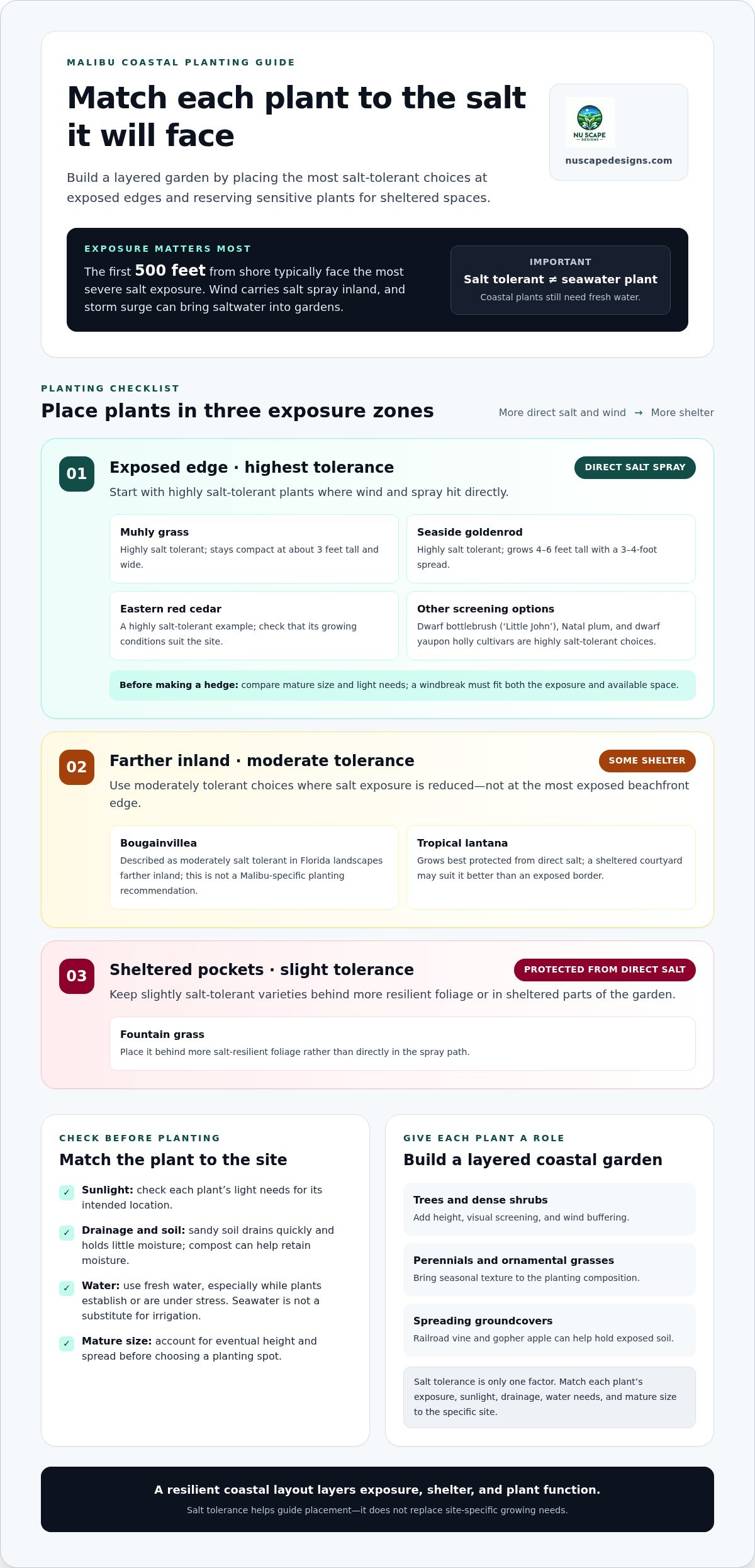
For coastal screening, consider shrubs with a compact, leafy form. Dwarf bottlebrush, Callistemon viminalis ‘Little John’, can help diffuse salty winds in beachside gardens. Natal plum and dwarf yaupon holly cultivars are other highly salt-tolerant choices. Before using them as a hedge, compare mature size and light needs. A windbreak must suit both the exposure and the available space.
Different plant forms serve different purposes. Trees add height and structure, while perennials and ornamental grasses bring seasonal texture. Spreading groundcovers such as railroad vine and gopher apple can help hold exposed soil. Decide on each plant’s role first, then assess its salt tolerance and growing needs for the specific Malibu site.
How do salt-tolerant plants compare for privacy screening and erosion control? Dense shrubs and trees are better for visual screening and buffering wind, while spreading groundcovers cover soil. Where space allows, combine different forms to create a layered coastal garden.
For a considered planting layout, explore custom landscape planning that accounts for screening, exposure, and garden composition.
3. Highly, moderately, and slightly salt-tolerant plants
Salt-tolerance ratings help organize a planting palette, but they don’t replace checking each plant’s light, drainage, and mature size. For Malibu sea salt tolerant plants for oceanfront homes, begin with plants rated highly tolerant at exposed edges, then reserve moderate and sensitive choices for sheltered spaces. Live oak can reach 60–80 feet tall with a similar spread, so it needs ample room; muhly grass stays far more compact at about 3 feet tall and wide.
Which plants are most tolerant of salt spray and sandy soil in Malibu? Highly salt-tolerant examples include muhly grass, seaside goldenrod, and eastern red cedar. Seaside goldenrod grows 4–6 feet tall with a 3–4-foot spread. Check whether eastern red cedar suits the garden’s growing conditions before planting. Match each plant’s size and sun needs to the specific garden area.
Moderately salt-tolerant plants are better suited to areas with less exposure. Bougainvillea is described as moderately salt tolerant in Florida landscapes farther inland, while tropical lantana grows best protected from direct salt. These examples illustrate how placement matters, not a Malibu-specific planting recommendation. A sheltered courtyard may suit them better than an exposed beachfront border.
Slightly salt-tolerant plants need more protection from direct salt. Fountain grass, for example, should go behind more resilient foliage. Create layers with highly tolerant plants at exposed edges, moderately tolerant choices farther inland, and sensitive varieties in sheltered pockets. This gives Malibu sea salt tolerant plants for oceanfront homes a clear role in the garden’s overall structure.
Nu Scape Designs: Custom Landscape Design Plans
Nu Scape Designs can help make salt exposure, sunlight, and sandy soil practical considerations in a cohesive coastal garden. Custom Landscape Design Plans organize plant placement and outdoor features around how you want to use the space. Drought-Tolerant Garden Design brings water-wise planting into the composition, with pavers or an outdoor barbecue incorporated where they fit your vision.
A complete landscape plan is a natural next step when you understand plant tolerance but still need to decide how the garden should look and function. Thoughtful placement can balance exposed edges with sheltered areas and connect planting with gathering spaces and pathways.
Visit Nu Scape Designs online to discuss your coastal landscape.
Shape a coastal garden that feels like home
Turn your plant choices into a landscape that reflects how you want to live outdoors. Consider where you hope to gather, where you would like a quiet retreat, and how the garden should frame ocean views. These priorities can guide a design that feels intentional rather than like a collection of individual planting decisions.
For salt-tolerant planting in Malibu oceanfront homes, a site-aware plan can bring practical needs and personal style together. Nu Scape Designs can translate your ideas into a landscape plan tailored to your home and how you use its outdoor spaces. Contact Nu Scape Designs to begin planning a coastal garden that feels welcoming and distinctly yours.
Frequently Asked Questions
Do plants like salt water?
Generally, no. Ordinary garden plants should not be watered with seawater. Halophytes can tolerate saline conditions, but that does not mean they need salt water. For oceanfront planting, use fresh irrigation water, particularly around new roots. Salt spray on foliage is different from saturating the root zone with seawater.
What does salt tolerant mean for coastal gardens?
Salt tolerant describes relative resilience, not immunity to every coastal condition. When comparing plants, consider whether the site exposes foliage to windblown salt, roots to salty runoff, or both. Then weigh sunlight, drainage, and the plant’s mature size. A sheltered courtyard and an open ocean-facing edge can call for different choices within the same garden.
What plants live in saltwater?
Seagrasses grow submerged in marine environments, while halophytes tolerate salty soils in coastal habitats. Neither is interchangeable with landscape plants selected to withstand salt spray. A Malibu garden plant grows on land and still needs suitable soil, drainage, and fresh water. Salt tolerance does not make it an underwater species.
When is the best time to plant in a coastal yard?
Planting time depends on the species: Pittosporum is recommended for spring after the last frost, while ‘Karl Foerster’ reed grass can be planted in early spring after the last frost or early fall, 6–8 weeks before the first hard freeze. Local conditions differ across Malibu, Ventura, Oxnard, Westlake Village, Calabasas, North Simi Valley, Lake Sherwood, Agoura Hills, Sherman Oaks, and Porter Ranch.
Why “Average” Plants Die at the Beach?
Plants unsuited to beach exposure can struggle because salt spray damages foliage, wind increases moisture loss, and sandy soil drains quickly. These pressures can compound: a plant with dry roots may be less able to withstand salt on its leaves. Choose plants for the specific site, not just their appearance, and keep vulnerable varieties in sheltered areas.