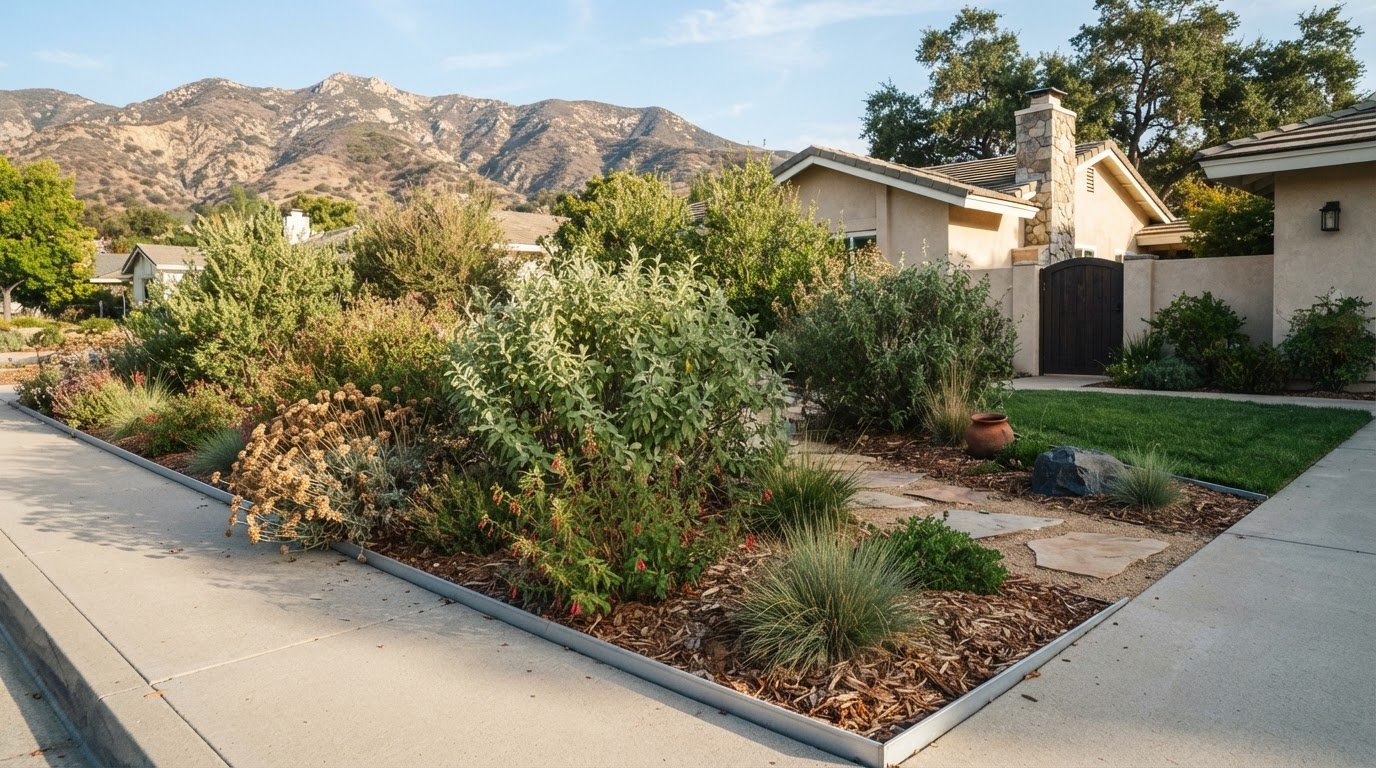
How to Make the Case for HOA-Approved Native Plants in Agoura Hills
A native garden can look deliberate, not untamed. Making the case for Agoura Hills HOA-approved native plants starts with knowing that California Civil Code §4735 prohibits HOAs from banning drought-tolerant plants or artificial turf, according to California Legislative Information. That protection doesn’t make every planting plan automatic: community landscaping rules may still shape details such as plant height, appearance, and approved plant lists.
It’s reasonable to want a landscape that feels orderly and welcoming while using less water and fewer chemicals. A thoughtfully composed native garden can support that goal without simply swapping one look for another.
This guide explains how to prepare a clear proposal, compare native planting with a traditional lawn, and make the case for reduced watering and chemical use. It also covers how defined beds, pathways, and region-specific plant suggestions can help neighbors and an HOA board picture the change.
Key Takeaways
- Frame your proposal around a polished garden design and practical benefits, not just a change in plant choice.
- Choose region-appropriate native plants, then shape the planting plan around your community’s appearance guidelines.
- Look for your HOA’s landscaping rules and approved plant list, and suggest suitable local additions if needed.
- Build neighborhood support with a visible example and clear ideas for reducing irrigation and chemical use.
Advocating for reduced watering and chemical use
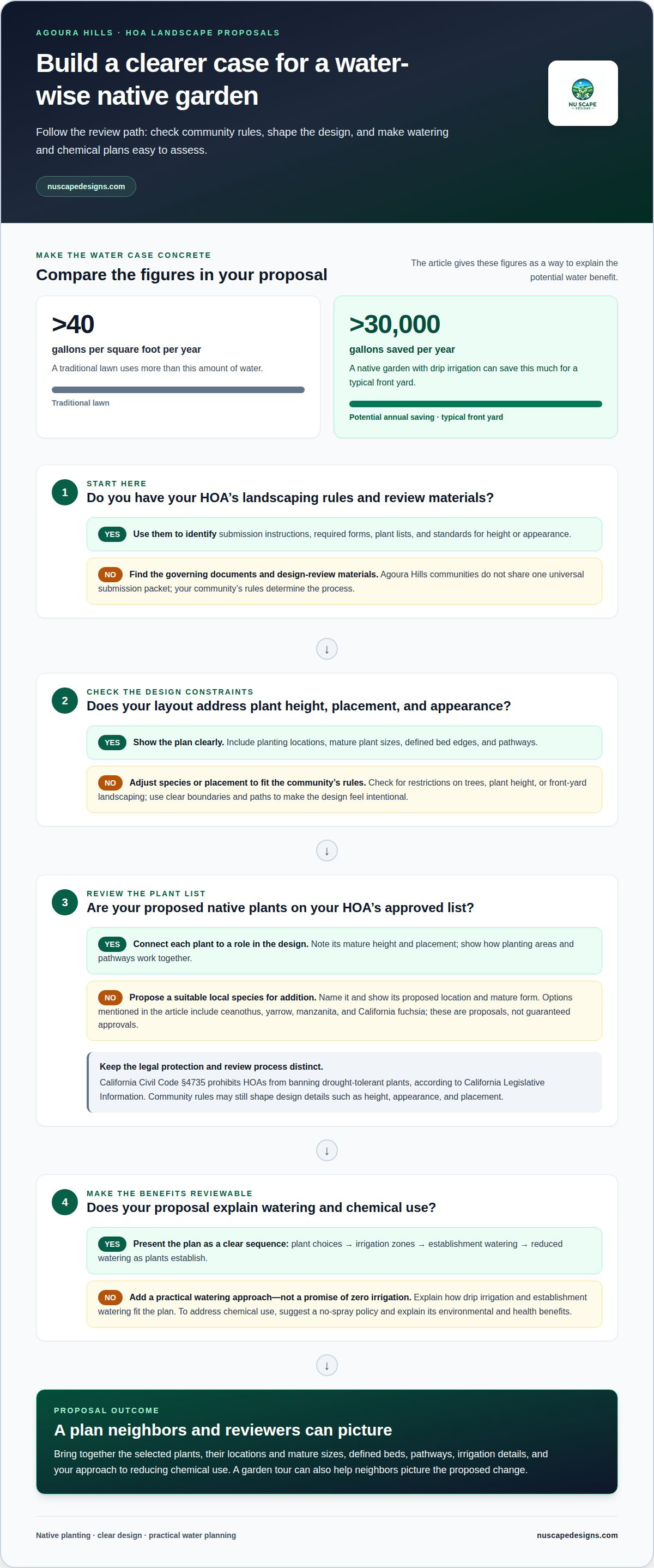
A traditional lawn uses more than 40 gallons of water per square foot per year. Make your proposal concrete with an organized planting plan and a clear approach to watering.
-
Identify Water-Wise Landscaping Requirements
Build your case around a practical watering plan, not a promise of zero irrigation. A native garden with drip irrigation can save more than 30,000 gallons per year for a typical front yard. Present plant choices, irrigation zones, and establishment watering as a clear sequence. Explain how the plan will reduce watering as plants establish.
-
Gather HOA Plans, Plant Lists, and Forms
Start with your HOA’s landscaping rules to identify required plans, plant lists, and forms. Agoura Hills communities don’t share one universal submission packet, so the governing documents determine each homeowner’s process. Make your proposal easy to review by showing planting locations, paths, and irrigation details. Include the documents and approvals your community requires.
-
Check Local Landscaping Restrictions
Check the community rules for limits on trees, plant height, or front-yard landscaping. These details can affect species selection and placement, even when your goal is a water-wise design. Show mature plant sizes and bed boundaries in the plan. Defined edges and pathways can make the layout feel intentional and address appearance concerns.
-
Find HOA-Approved Landscaping Lists
Look for an approved plant list in your HOA’s landscaping rules, then compare it with native plants suited to the region. If the list omits suitable local species, propose adding them with clear names and placement examples. To advocate for less chemical use, suggest a no-spray policy and explain its environmental and health benefits. A garden tour can help neighbors picture the proposed change.
Which native plants are approved by HOAs in Agoura Hills, California?
Agoura Hills HOAs don’t share one universal plant list. Approval depends on your community’s rules and the planting plan you submit.
- For Agoura Hills HOA-approved native plants, start with your community’s approved list, if available. Compare its entries with your preferred species, noting mature height and placement. California garden options include ceanothus, yarrow, manzanita, and California fuchsia. These are plants to propose, not a guarantee that every HOA has approved them.
- Give each plant a clear role in the design. Show where low-growing yarrow could define an edge or where manzanita could anchor a bed. A legible layout helps reviewers assess both appearance and species selection. Keep the composition easy to follow, with distinct planting areas and pathways.
- If the list omits a suitable native, propose adding it. Name the plant and show its proposed location and mature form. California Civil Code §4735 prohibits HOAs from banning drought-tolerant plants, according to California Legislative Information. Explain how your proposal addresses drought tolerance while recognizing that design details may still be reviewed.
- Present Agoura Hills HOA-approved native plants in a cohesive visual plan. A considered mix of ceanothus, yarrow, and California fuchsia can add layered color and pollinator appeal. Defined borders and pathways help the planting read as intentional landscaping, giving neighbors and board members a clearer picture of the finished garden.
Do Agoura Hills HOAs publish approved landscaping or plant lists?
Some HOA landscaping rules include approved plant lists; others set standards without naming every species. For Agoura Hills HOA-approved native plants, follow the guidance adopted by your own community.
- Find your community’s landscaping rules and design-review materials. Look for an approved plant list, submission instructions, and standards for height or appearance. These documents show whether reviewers assess individual species, the overall plan, or both. Keep the relevant pages together so your proposal addresses the right criteria.
- Read any plant list alongside the design standards. A species appearing on a list doesn’t explain how it should be placed or arranged. Note requirements for planting areas, visibility, or presentation, then reflect them in your plan. This makes the connection between plant choices and the finished landscape easier to understand.
- If the list omits a suitable local species, propose adding it with a concise rationale. Name the plant and show where it would grow in the design. Agoura Hills HOA-approved native plants are easier to assess when reviewers can see the proposed species and understand its intended role.
- If your HOA has no plant list, present the proposed species through its existing design-review process. Show the full composition, including paths and transitions between garden areas. For Agoura Hills HOA-approved native plants, a clear, specific proposal can help the board consider updating its landscaping guidance.
Requirements vary by community: an HOA may use an approved plant list, design standards, or both. Follow its submission instructions and show the selected species, their placement and purpose, and how the full landscape, including paths and transitions, will look.
Nu Scape Designs
Nu Scape Designs helps homeowners shape native-plant ideas into considered landscape plans tailored to the Southern California climate. When HOA rules call for clear plant choices, defined beds, and an orderly appearance, a Custom Landscape Design Plan can bring those elements together in a cohesive proposal. Drought-Tolerant Garden Design can also support a water-wise approach.
The plan can show plant placements, pathways, and how garden beds relate to the rest of the outdoor space. Pavers or an outdoor barbecue can be incorporated when they support the overall layout and complement the garden’s character.
Contact Nu Scape Designs to discuss turning your native garden vision into a thoughtful landscape plan.
Let Your Garden Vision Take Root
A thoughtful proposal for Agoura Hills HOA-approved native plants can be more than a request to change your landscape. It can express the atmosphere you want at home: a welcoming entrance, a calmer view from the window, or an outdoor setting connected to the surrounding landscape. Let that vision guide the choices you present.
Before moving ahead, decide what matters most in your daily life and how the garden can reflect it. A clear purpose gives your proposal a personal center, while a composed design helps others imagine the finished space. Each considered detail can bring you closer to a garden that feels distinctly yours.
A simple idea can be the first step toward a more beautiful, thoughtful outdoor space.
Frequently Asked Questions
Can My HOA Still Deny a Native Garden in California?
Generally, an HOA cannot ban a drought-tolerant garden in California. Under California Civil Code §4735, HOAs are prohibited from banning drought-tolerant plants or artificial turf, according to California Legislative Information. That protection addresses plant category, not every design detail. In Agoura Hills, separate the proposed species from layout concerns and respond to each HOA standard with a clear explanation.
Can my HOA require me to keep some grass?
An HOA cannot use a grass rule to ban drought-tolerant plants, but §4735 doesn’t state that every yard must be grass-free. California Civil Code §4735 prohibits HOAs from banning drought-tolerant plants or artificial turf, according to California Legislative Information. If your community asks you to retain lawn, request the precise written provision and identify whether it concerns appearance or plant choice.
Does AB 1572 override old HOA landscaping rules?
California’s AB 1572 was enacted in 2023 and amended Civil Code 4735 to address drought-tolerant landscaping. It addresses water-wise planting, so don’t assume every older HOA rule about layout, appearance, or review procedure automatically disappears. For an Agoura Hills application, identify the exact restriction at issue and explain how your proposal meets other stated standards.
How Do I Create a Native Garden that My HOA Will Approve?
Prepare a proposal that lets reviewers picture the finished yard before work begins. Add a simple site sketch, label each plant, and show where pathways, lawn, and hardscape meet. Include current-yard photos and a brief note about the intended look from the street. Submit through the HOA’s stated process and keep a copy of your application and the decision.
Is it legal to have native plants in my HOA?
Yes, native plants can be used in HOA communities, and California law bars HOAs from banning drought-tolerant plants. California Civil Code §4735 prohibits that ban, according to California Legislative Information. The distinction matters because “native” and “drought-tolerant” describe different qualities; identify the water-wise characteristics of each proposed species rather than relying on its native label alone.