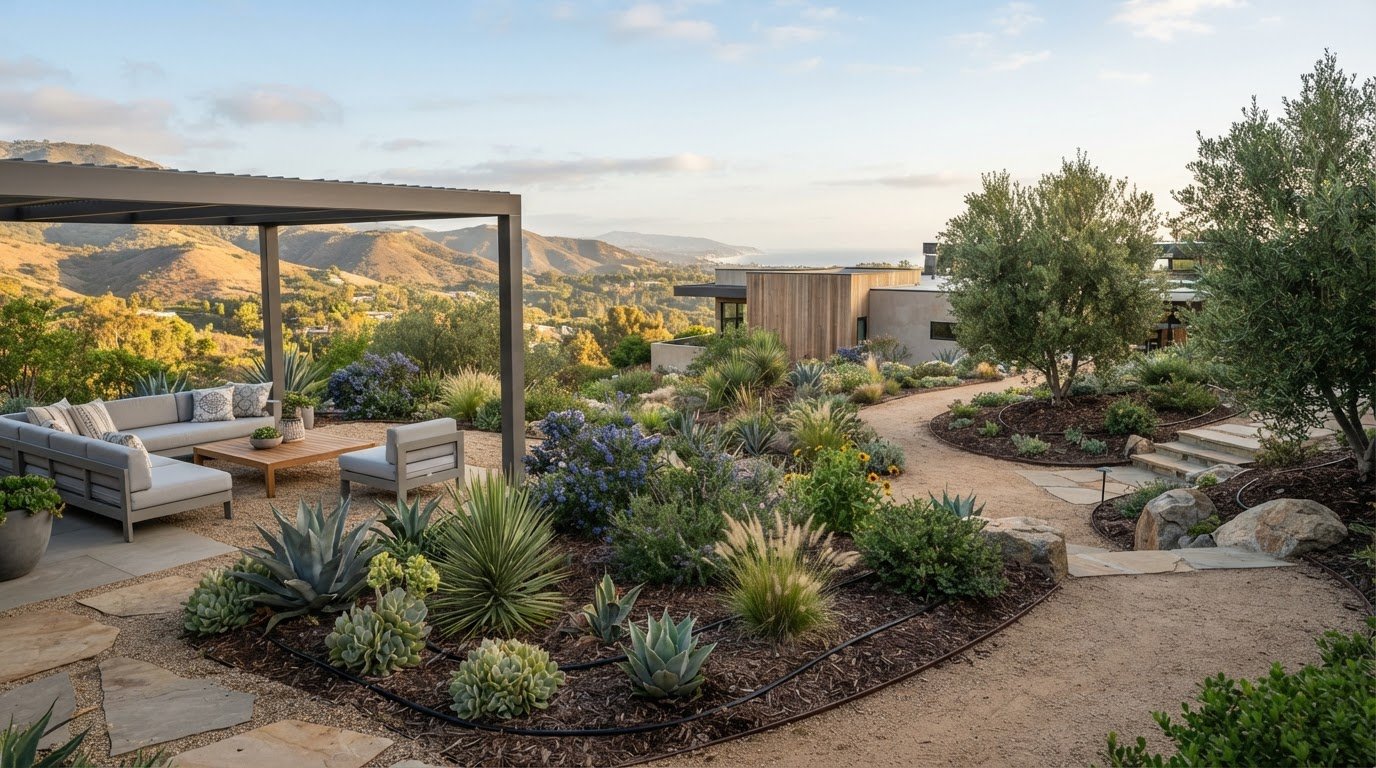
Water-Efficient Garden Design in Southern California: A 2026 Planning Guide
For water efficient garden design Southern California homeowners can enjoy, start with the way you live outdoors, not just a plant list. A water-wise garden doesn’t have to feel sparse or trade comfort for conservation. With thoughtful planting and a layout shaped around your routines, it can feel welcoming and well suited to the local climate.
To plan a garden that works as a whole, first assess your space, then consider how soil, plants, irrigation, and outdoor activities fit together. This guide walks through those decisions, from observing sun and drainage to creating a clear design brief. A custom landscape design plan can help bring separate ideas together in a garden that feels considered, comfortable, and distinctly yours.
Key Takeaways
- Start with a site assessment: note sun, slopes, soil, shade, drainage, and where you spend time outdoors before choosing plants or features.
- Water efficient garden design Southern California works best when planting, soil, irrigation, and layout are planned together.
- Group plants by water needs, then use considered planting for color, texture, and comfort around inviting outdoor spaces.
- Turn your observations and lifestyle priorities into a clear design brief; a custom plan can bring them together in a cohesive landscape.
Start Water-Efficient Garden Design in Southern California with a Site Assessment
Water-efficient garden design coordinates plants, soil, irrigation, and outdoor use so each part of the landscape responds to local conditions. Plant choice matters, but it can’t solve every issue on its own. A plant suited to a sunny slope may struggle in a shaded, compacted corner. A well-placed seating area, meanwhile, can make a smaller planted space feel generous and inviting.
Southern California’s coastal and inland climates bring different design considerations. Coastal properties may experience marine influence and shifting shade, while inland yards can face stronger heat and sun exposure. Within a single property, a wall, slope, tree canopy, or paved area can also create its own microclimate. Understanding these differences is a useful starting point for sustainable landscaping principles and a site-specific plan.
Which parts of a Southern California yard should you assess first?
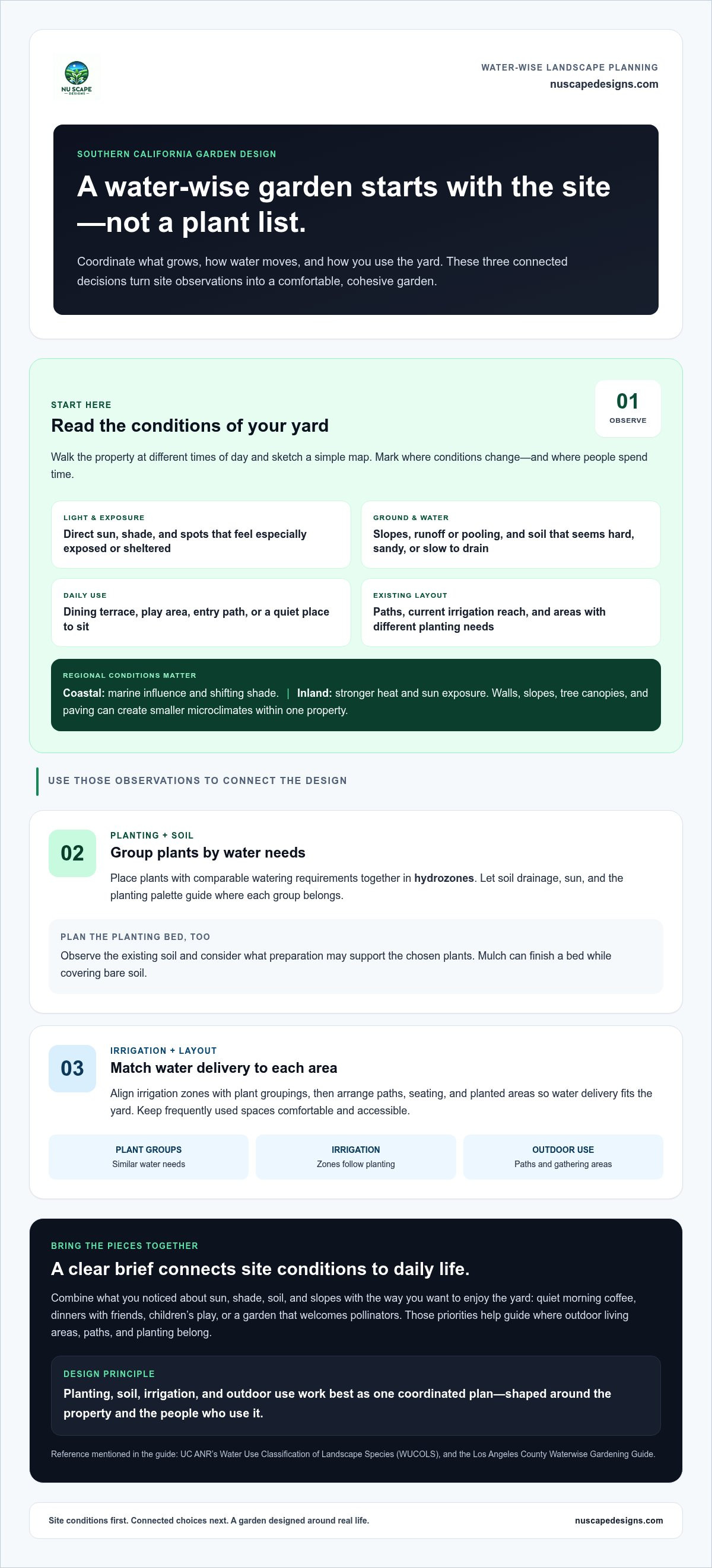
Walk the yard at different times of day and sketch a simple map. Mark areas of direct sun and shade, slopes, places where water collects or runs off, and spots that feel especially exposed or sheltered. Note where the soil appears hard, sandy, or slow to drain. Also mark the places your household uses most, such as a dining terrace, children’s play area, entry path, or quiet spot for sitting. Together, these observations show where comfort and planting should take priority.
Include existing paths and irrigation in your notes. A route used every day may need to remain clear and comfortable, while a rarely used edge could suit a layered planting bed. Note where irrigation currently reaches and whether different parts of the yard have different sun, soil, or plant needs. These details provide a practical foundation before you choose features or plants. For more context on how regional conditions inform a cohesive landscape, explore our landscape design services.
Design a Water-Efficient Southern California Garden Without Losing Comfort or Character
A cohesive garden takes shape when plant choices, soil, irrigation, and the way you use the space are considered together. Use this sequence to organize your decisions:
- Group plants by water needs. Place plants with similar watering requirements together in hydrozones. Grouping plants this way can make irrigation planning more straightforward. For climate-suited options, explore drought-tolerant garden design and use UC ANR’s Water Use Classification of Landscape Species (WUCOLS) as a reference for plant water needs.
- Consider the soil alongside your planting plan. Observe how the existing soil drains and what preparation may support the plants you’ve selected. Mulch can be part of the plan, giving planting beds a finished look while covering bare soil.
- Coordinate irrigation and layout. Align irrigation zones with plant groupings, then arrange paths, seating, and planted areas so water delivery fits each part of the yard. Keep frequently used spaces comfortable and accessible.
How do plant zones, soil, and irrigation work together?
A hydrozone is a garden area where plants with comparable water needs share an irrigation zone. The choices are connected: your planting palette informs irrigation design, while soil and sun conditions help determine where each group is best placed. Avoid scattering plants with very different water needs throughout the yard. Giving each group a considered location makes it easier to plan the landscape and its irrigation together.
Water-wise planting can still feel abundant. Layer foliage at different heights, combine contrasting leaf shapes, and bring color near gathering areas or along a path. A shaded seating nook, open play space, and textured planting beds can each have a distinct character while still feeling like parts of the same garden. Nu Scape Designs creates custom landscape plans that coordinate planting, irrigation design, and outdoor living around the property and the way you use it.
For a cohesive approach to water efficient garden design Southern California, begin with how you want the garden to look and feel, then let site conditions guide the details. Explore Nu Scape Designs’ landscape approach as you shape your priorities.
Turn Your Southern California Garden Priorities into a Custom Water-Wise Plan
A clear design brief turns observations into decisions. Bring together what you’ve noticed about sun, shade, soil, and slopes with the ways you want to enjoy the yard. Do you picture quiet morning coffee, dinners with friends, a place for children to play, or a garden that welcomes pollinators? Naming your priorities helps guide where outdoor living areas, paths, and planting belong.
What does a tailored garden plan need to reflect?
A thoughtful plan balances your vision with the property’s conditions. Note which areas should feel open or sheltered, where planting could frame a view, and which spaces see daily use. Then consider how climate-aware plant choices and irrigation design can support those activities. The Los Angeles County Waterwise Gardening Guide offers helpful context on water-wise planting, irrigation, and soil considerations as you refine your brief.
With more than 30 years of design experience, Nu Scape Designs owner and lead designer Donna Hamner brings a considered perspective to custom landscape planning. Nu Scape Designs develops personalized plans that bring together drought-tolerant planting, water-wise design, irrigation planning, and functional layouts tailored to each property and lifestyle. A custom landscape design plan can turn your notes and preferences into a coherent direction for the garden.
That coordination is central to water efficient garden design Southern California: the plan should respond to the site while making room for the moments you want to spend outdoors. Homeowners in Ventura, Oxnard, Westlake Village, Calabasas, Malibu, North Simi Valley, Lake Sherwood, Agoura Hills, Sherman Oaks, and Porter Ranch can bring their observations and priorities to Nu Scape Designs to shape a landscape plan around the way they live.
Shape a Garden That Feels Like Your Own
Your next step is to picture how you want the garden to feel and what you want it to make possible. A water efficient garden design Southern California homeowners can enjoy should reflect more than a planting palette. It should support the rhythms of home, from a peaceful morning outdoors to an evening shared with friends. Let that vision guide the choices ahead.
Nu Scape Designs brings experience shaped by 130+ completed projects and 100+ satisfied clients, with a 5.0 rating across Google and Facebook. That perspective informs personalized landscape plans designed around each property, its climate, and the homeowner’s priorities.
Your ideal garden doesn’t have to follow a template. Make room to imagine a space that feels welcoming, beautiful, and distinctly yours.
Frequently Asked Questions
Is water-efficient garden design the same as xeriscaping?
They overlap, but the terms aren’t always used identically. Both can describe gardening that considers climate, plant water needs, and thoughtful water use. A water-efficient plan can also shape details such as where a path leads, how a patio connects to the home, and how soil and irrigation support different areas. For water efficient garden design Southern California, focus on how the whole yard functions, not just the label.
Can a water-efficient Southern California garden still include lawn?
Yes. Lawn can fit into a water-wise landscape if it serves a regular purpose, such as a play area or a comfortable place for outdoor gatherings. Think about where it will be most useful, how much space that activity needs, and how it connects to nearby paths or planting. Homeowners in Ventura, Oxnard, Westlake Village, Calabasas, Malibu, North Simi Valley, Lake Sherwood, Agoura Hills, Sherman Oaks, and Porter Ranch can make the choice around their own routines.
When should I adjust my garden's irrigation schedule in Southern California?
Revisit your irrigation schedule as weather, rainfall, seasonal conditions, and plant establishment change. After rain, check whether the soil is still moist before running irrigation; newly planted areas may also need different attention from established ones. Look for signs of plant stress as well as damp soil, rather than following a fixed calendar alone. Follow current guidance from your local water agency, since recommendations can vary by location.