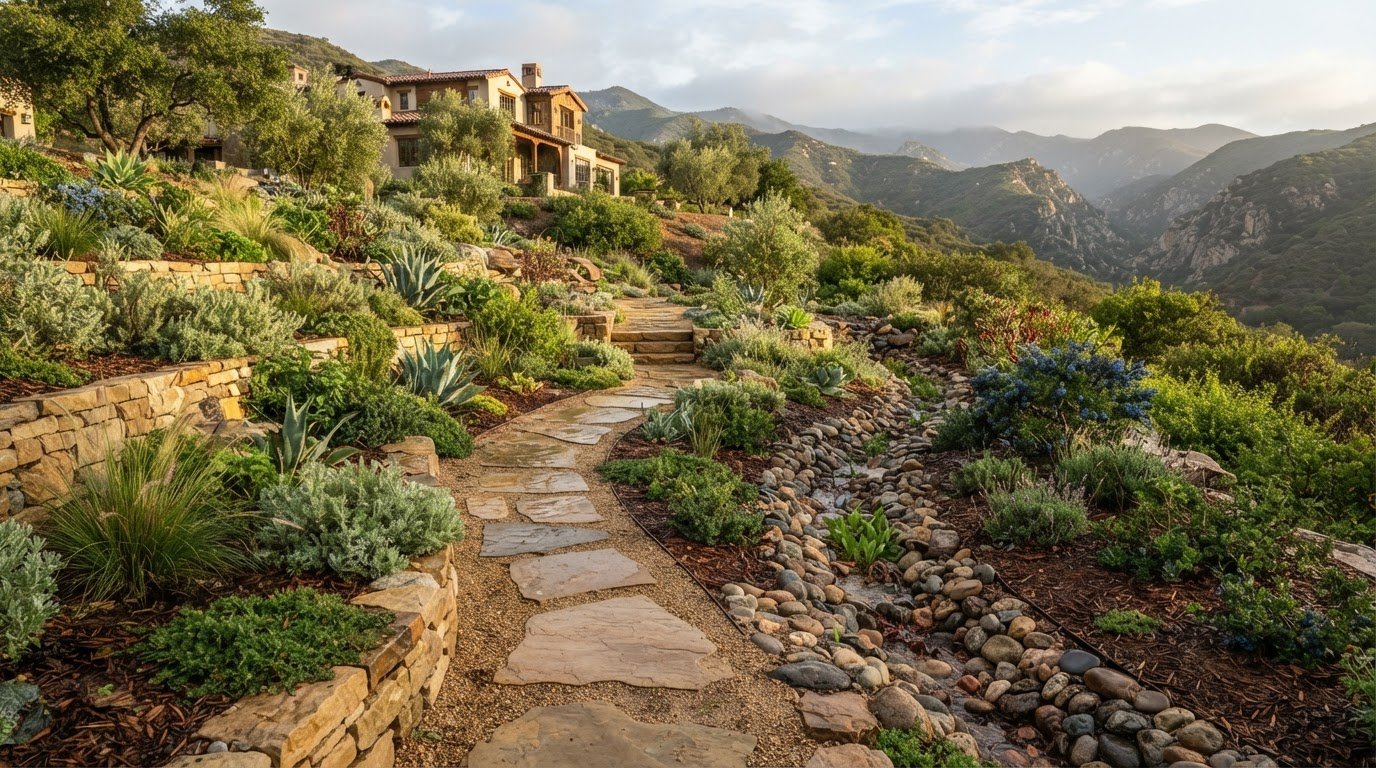
Erosion Control Landscaping in Southern California: A Practical Guide
What if a sloped yard could feel more stable and inviting? With erosion control landscaping Southern California homeowners can plan for runoff and soil movement while shaping an outdoor space that is beautiful and easier to enjoy.
If rain leaves mulch scattered downhill, bare patches exposed, or a slope difficult to use, the landscape may need a closer look at how planting, circulation, and water flow work together. Those signs are useful clues, but they do not identify the cause on their own.
This guide explains practical ways to plan for erosion concerns, from observing runoff to coordinating planting and paths. The right approach depends on your property’s slope, soil, existing vegetation, and drainage. For persistent runoff or signs of slope instability, landscape planning may need to be paired with a qualified technical assessment.
Key Takeaways
- Look for slope changes, exposed soil, runoff paths, and areas where water collects to understand where the landscape needs attention.
- Use a clear planning sequence: observe the site, map water movement, consider planting, and coordinate paths and outdoor spaces.
- Erosion control landscaping Southern California homeowners can tailor to a property should balance soil protection with a beautiful, usable outdoor space.
- Persistent runoff or an unstable-looking slope may call for a qualified technical assessment alongside landscape planning.
Why erosion control landscaping matters on Southern California properties
Erosion control landscaping Southern California homeowners can use starts with understanding the relationship between the landform, planting, and water movement. The aim is to help protect soil while creating a landscape that feels natural and inviting. Slopes, bare patches, channels where runoff travels, and low points where water collects can all offer clues about how a property responds to rain.
Runoff is visible, but its cause depends on how water moves across a specific site. Soil washing away or mulch gathering downhill can point to a flow pattern worth understanding before choosing plants or landscape features. General erosion control approaches include vegetation and mulching, but their suitability depends on local conditions.
For a visual introduction to hillside planting in the region, watch this video:
What makes erosion concerns different across Southern California sites?
Slope, soil, existing plant cover, and seasonal rainfall all influence whether water soaks in, runs across the surface, or gathers in a particular area. Conditions vary from property to property, including between Ventura County and the Santa Monica Mountains. A planting approach that suits one site may not suit another.
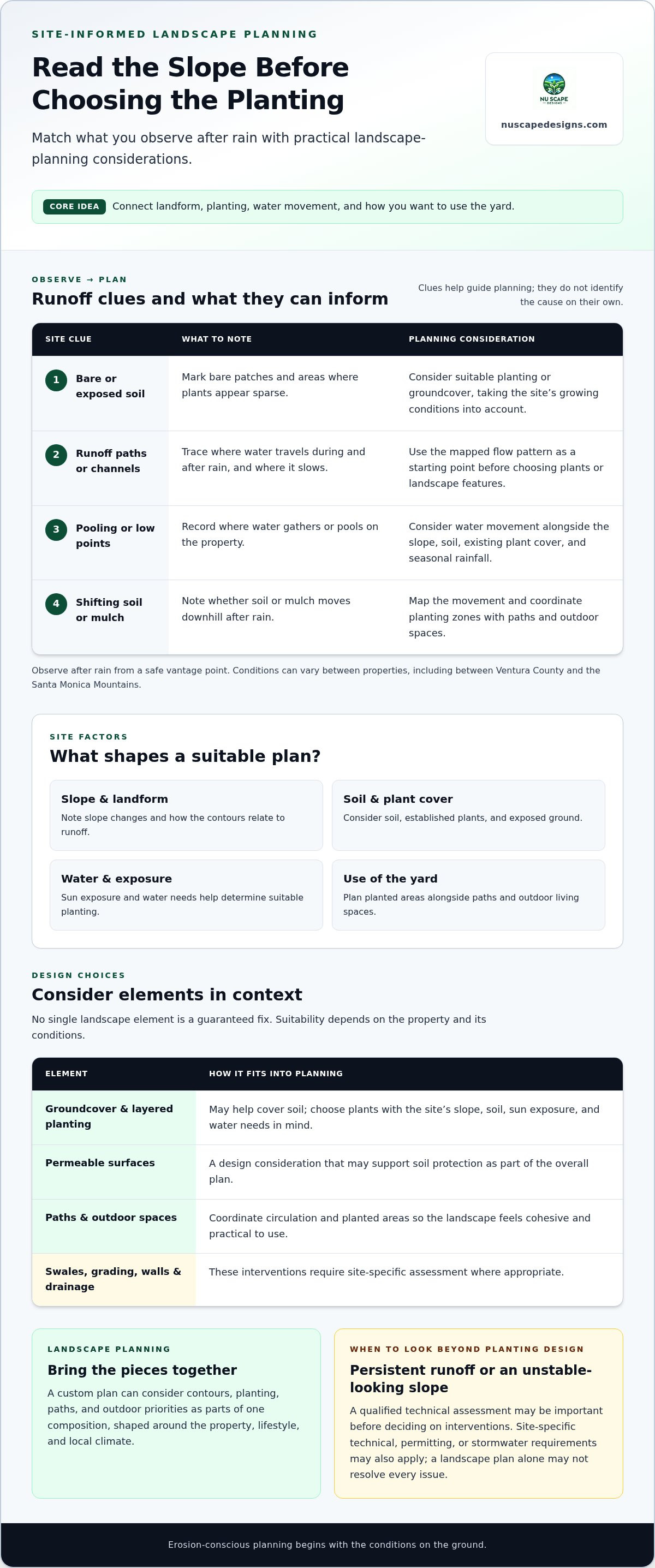
After rain, observe the yard from a safe vantage point. Note where water travels, where it slows or pools, and whether soil or mulch shifts. Also record bare patches and areas where plants appear sparse. These observations give a designer a more useful starting point than choosing plants based on appearance alone. Persistent runoff or signs of slope instability may need a qualified technical assessment beyond planting design.
How to plan erosion control landscaping with plants and site features
A thoughtful plan connects soil protection with the way you want to move through and enjoy the yard. For erosion control landscaping Southern California homeowners can tailor to their property, work through the site in sequence:
- Observe: Note bare areas, changes in slope, existing plants, and places where water gathers.
- Map runoff: Trace where water travels during and after rain. Mark channels, pooling, and places where soil or mulch moves.
- Identify exposed soil: Consider where suitable planting or groundcover could cover bare patches, while keeping the site’s growing conditions in mind.
- Coordinate planting and circulation: Plan planting zones alongside paths and outdoor spaces so the landscape feels cohesive and practical to use.
Plant selection should follow the site conditions, not a one-size-fits-all list. Sun exposure, soil, slope, and water needs all help determine what is suitable. A layered mix of groundcover and other climate-appropriate planting can cover soil while adding texture and seasonal interest. Nu Scape Designs creates custom landscape plans around each property, homeowner lifestyle, and local climate, with a focus on water-wise, low-maintenance gardens.
Which landscape elements can help slow runoff and protect soil?
Groundcover, planting zones, and permeable surfaces are design considerations that may support soil protection, but no single element is a guaranteed fix. Swales, grading changes, walls, or drainage interventions require site-specific assessment where appropriate. The Caltrans Erosion Control Toolbox provides broader reference material on erosion-control approaches. For climate-conscious planting ideas, consider drought-tolerant garden design.
When planting, circulation, and outdoor living are considered together, practical choices can feel like part of the design rather than an afterthought. Nu Scape Designs’ custom landscape planning brings those priorities into one plan, with features such as pavers and outdoor living spaces considered as part of the overall composition.
Turn erosion concerns into a cohesive Southern California landscape plan
A slope does not have to remain an awkward edge of the yard. A custom landscape plan can consider how contours, planting, and paths work together, while making room for outdoor priorities such as a gathering area or a clear route through the garden. That is the design-led value of erosion control landscaping Southern California homeowners can tailor to their property: soil protection and usability are considered as parts of the same composition.
What should a site-informed erosion-control landscape plan consider?
A site-informed plan responds to the property’s slope, soil, and water flow. Document existing conditions, including exposed ground, established planting, runoff routes, and places where water collects. Then clarify how you want to use the yard and consider the relationship between planted areas, paths, and outdoor spaces. Nu Scape Designs develops custom plans around each property, lifestyle, and local climate. Explore the landscape design services and California landscape design articles for more ideas.
Some concerns call for more than planting design. If runoff persists or a slope appears unstable, a qualified technical assessment may be important before deciding on interventions. The LA County Homeowner's Guide to Erosion Control offers regional information about flood, debris, and erosion concerns. Site-specific technical, permitting, or stormwater requirements may also apply, so do not assume a landscape plan alone will resolve every issue.
Nu Scape Designs creates custom landscape plans for homeowners in Ventura, Oxnard, Westlake Village, Calabasas, Malibu, North Simi Valley, Lake Sherwood, Agoura Hills, Sherman Oaks, and Porter Ranch. Plans are shaped around the property, lifestyle, and local climate, with water-wise design that can bring planting, circulation, and outdoor living priorities together.
Frequently Asked Questions
What is erosion control landscaping?
Erosion control landscaping coordinates landform, planting, and water movement to help protect soil. It considers where runoff travels, where water collects, and how bare areas might be covered or incorporated into the overall design. Erosion control landscaping Southern California homeowners can tailor to their property should reflect the local climate and how they want to use the space.
How can landscaping help prevent soil erosion on a slope?
Landscaping can help address exposed soil and account for runoff by coordinating suitable planting, groundcover, paths, and other site features. Observe the slope after rain to see where water flows and whether soil or mulch shifts. Conditions vary, so persistent runoff or signs of slope instability may call for a qualified technical assessment beyond planting design.
Which plants are best for erosion control in Southern California?
There is no single best plant for every Southern California slope. Choose plants according to the site’s sun exposure, soil, slope, and water needs, and consider suitable groundcover for bare areas. A water-wise planting plan should also reflect the local climate and the homeowner’s goals, rather than applying the same plant palette to every property.
Can groundcover alone stop erosion in a sloped yard?
Groundcover may help cover exposed soil, but it cannot be assumed to stop erosion on its own. The slope’s conditions, runoff patterns, and other site features matter too. A coordinated landscape plan can consider planting alongside circulation and outdoor living needs. Nu Scape Designs creates custom plans for homeowners in Ventura, Oxnard, Westlake Village, Calabasas, Malibu, North Simi Valley, Lake Sherwood, Agoura Hills, Sherman Oaks, and Porter Ranch.