Coastal Slope Landscaping in Southern California: A Thoughtful Design Guide
What if the key to a beautiful coastal slope isn’t choosing tougher groundcover, but designing the whole site to work together? Soil washing downhill, salt-laden air, dry summers, and awkward access can make a steep garden feel like a constant concern. Those challenges are easier to address when you begin with the land itself. Coastal slope landscaping Southern California homeowners can enjoy starts with a plan that responds to the site, rather than treating planting as a stand-alone fix.
This guide explains how coastal exposure, slope shape, drainage, and plant selection influence one another. You’ll learn what to observe before choosing plants, how to plan access and gathering areas, and how a custom landscape plan can connect a slope with the home. The goal is a landscape that feels practical, water-wise, and at home in its setting.
Key Takeaways
- Successful coastal slope landscaping Southern California properties starts with reading the site, including its exposure, terrain, water movement, and intended use.
- Map the slope’s conditions before choosing plants or shaping access, so each decision responds to the landscape rather than working in isolation.
- Layered planting can add visual depth and help the design feel at home in its coastal setting; plant choices depend on the specific site.
- A custom landscape plan can connect the slope with nearby views and outdoor living areas while balancing water-wise choices with your priorities.
Coastal Slope Landscaping in Southern California Starts with the Site
Coastal slope landscaping Southern California homeowners can live with begins by understanding the slope as a whole. Terrain, coastal exposure, water movement, and how people use the space all shape the design. Planting is one part of the response, alongside circulation, views, and the slope’s connection to the home.
Coastal wind and salt exposure can affect which plants thrive and where they belong. Dry periods call for water-wise choices, while seasonal rain can send runoff across exposed ground or along existing channels. Before choosing plants, note how conditions change across the slope: the upper and lower areas may differ in sun, wind, soil moisture, and access. A layout that accounts for these factors can feel more settled than a slope treated as a planting bed alone.
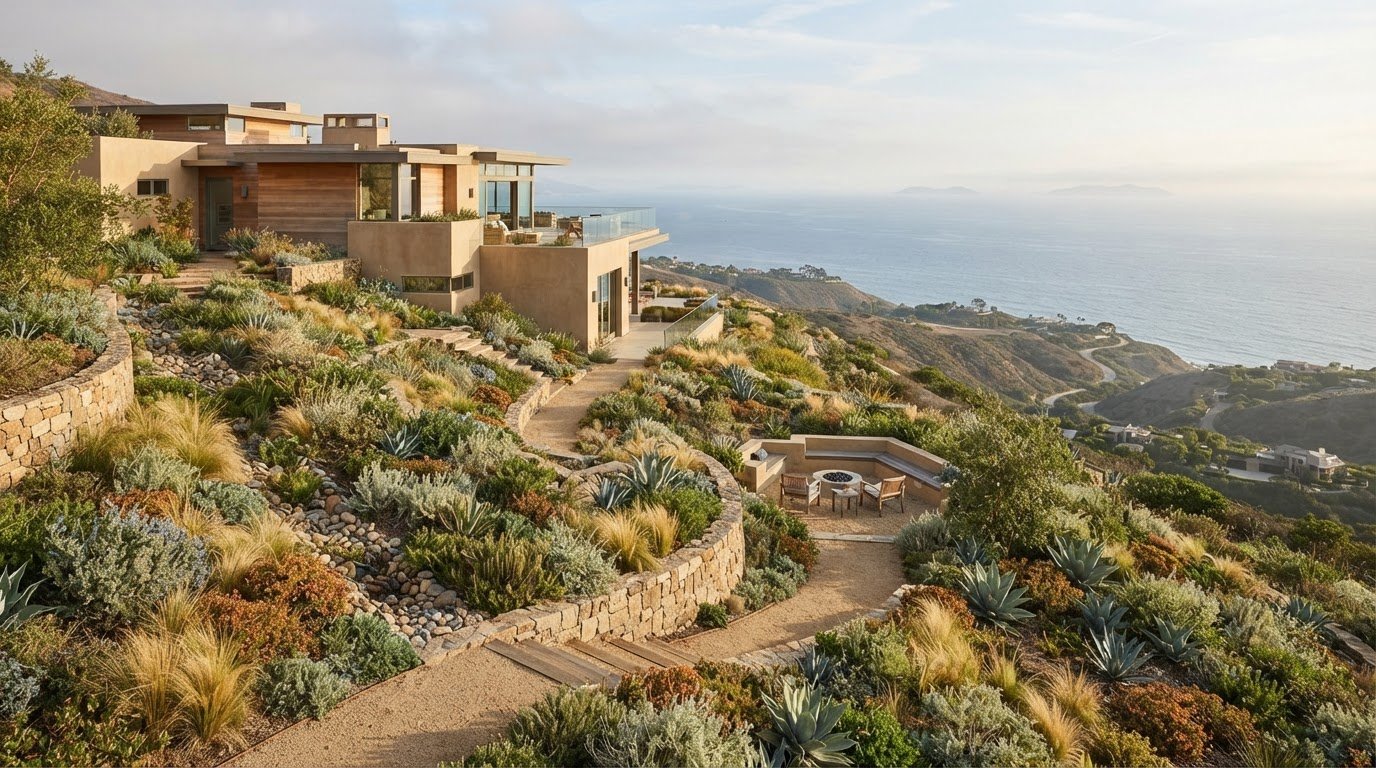
This sloped backyard transformation offers a visual example of how a hillside can become a more usable outdoor space:
What to observe before planning a coastal hillside garden
Walk the site and note where the slope steepens, flattens, or changes direction. Aspect, or the direction a slope faces, affects its sun and wind exposure. Existing vegetation can show where growth is established; bare patches and exposed roots deserve closer attention. Look for signs of water movement after rain, such as small channels, deposited soil, or areas where water gathers. Also note which parts of the slope are easy to reach and which are difficult to maintain or use.
- Mark visible runoff paths, channels, and areas where water gathers.
- Note bare ground, exposed soil, existing plants, and changes in slope.
- Identify access constraints and spots used by household members.
- Consider how sun and wind exposure change across the slope.
Planting can provide soil coverage and contribute to an erosion-conscious design, but it can’t guarantee slope stability. Signs such as slumping, cracking, or persistent concentrated runoff call for a site-specific assessment before landscape decisions are made.
How to Plan Coastal Slope Landscaping: Planting, Water, and Access
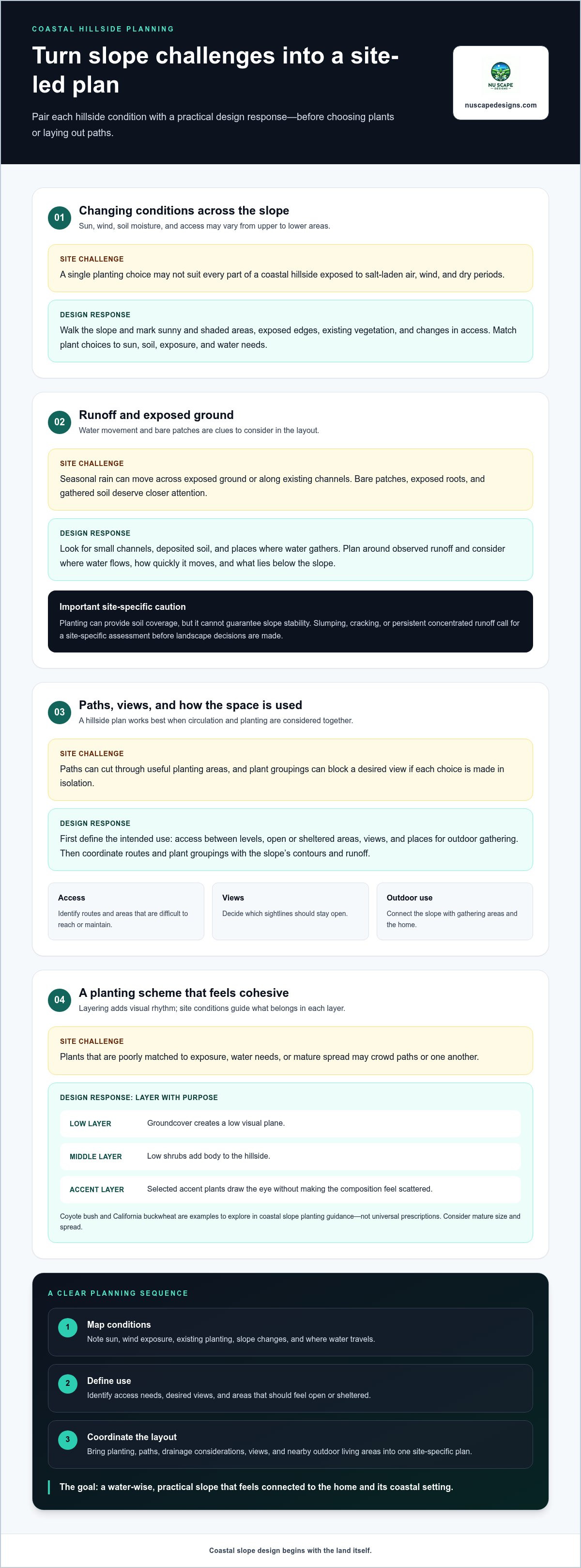
A clear sequence helps turn a challenging incline into a landscape with purpose. First, map the slope’s sun, wind exposure, existing vegetation, and water paths. Next, decide how the space should function: perhaps it needs a route between levels, a clear view toward the landscape, or a planted backdrop for an outdoor gathering area. Then coordinate planting and circulation around those priorities. Planning these elements together helps avoid paths that cut across the most useful planting areas or plant groupings that block a view.
- Map conditions: Mark sunny and shaded areas, exposed edges, existing planting, and where water travels.
- Define use: Identify access needs, desired views, and areas that should feel open or sheltered.
- Plan the layout: Coordinate plant groupings and paths with the slope’s contours and observed runoff.
Drainage deserves its own attention. A considered plan accounts for where water flows, how quickly it moves, and what lies below the slope. Avoid directing runoff toward areas where it could cause problems, and don’t assume planting alone will resolve a drainage concern. Each slope needs a response based on its conditions rather than a one-size-fits-all treatment.
Choose planting layers for coastal exposure and seasonal change
Layering can bring rhythm to a hillside: groundcover creates a low visual plane, low shrubs add body, and selected accent plants draw the eye without making the composition feel scattered. Coyote bush and California buckwheat are examples to explore in coastal slope planting guidance, not universal prescriptions. Match plant choices to sun, soil, exposure, and water needs. Consider mature size and spread as well, so plants have room to grow without crowding paths or one another.
For a cohesive result, a custom landscape plan can bring planting, circulation, and the slope’s relationship to the rest of the property into one considered design.
Bring a Southern California Coastal Slope Together with a Custom Design
A custom plan can make a slope feel like a natural extension of the home, rather than a separate challenge at the edge of the yard. Planting, paths, view lines, and nearby outdoor living areas are considered together. A route between levels, for example, can support everyday access while preserving an open view or connecting naturally to a patio.
That coordination matters for coastal slope landscaping Southern California homeowners want to feel refined and manageable. Water-wise plants, appropriately placed irrigation, and clear circulation can support a lower-maintenance landscape, while the overall composition reflects the property and the people who use it. The right balance depends on site conditions and how the homeowner wants to spend time outdoors.
Turn a challenging slope into a cohesive part of the landscape
Led by owner Donna Hamner, Nu Scape Designs creates custom plans tailored to each property, homeowner, and Southern California climate. A custom landscape design plan can bring planting, drainage considerations, usable areas, and visual character into one considered direction. For regional context during early planning, homeowners can also consult this landscape design reference.
Each property has its own character. Browse landscape design projects to see varied work, then consider how a thoughtful plan could connect your slope with the rest of your outdoor space. Nu Scape Designs creates custom landscape plans, including drought-tolerant designs suited to the Southern California climate.
Shape a Slope That Feels Like Home
A coastal hillside can become more than a difficult part of the property. With a design shaped around your home, lifestyle, and local climate, coastal slope landscaping Southern California homeowners envision can feel welcoming and connected, with outdoor spaces that invite you to pause, gather, and enjoy the setting. A thoughtful plan can balance beauty and everyday function with water-wise, low-maintenance choices.
Your slope has its own character. A custom landscape plan can bring that character into focus and support the way you want to enjoy your home.
Frequently Asked Questions
Is every coastal slope suitable for groundcover planting?
No. Groundcover may be a poor fit where soil is actively moving, runoff is concentrated, or planting access is limited. For coastal slope landscaping Southern California properties, distinguish ordinary bare soil from warning signs such as fresh cracks or slumping. Those conditions call for a site-specific assessment before selecting plants or disturbing the slope.
Can California native plants help reduce erosion on a slope?
Suitable native plants can help cover surface soil as they establish, and their root systems may help hold that upper layer in place. They aren’t a guarantee against erosion or deeper slope movement. Choose plants suited to the site’s exposure and soil, and consider how their mature size and spread will affect nearby plants and paths.
When is the best time to plant a Southern California coastal slope?
Fall is often a practical planting window in Southern California, since milder conditions can give roots time to establish before summer dryness. Timing varies by site: coastal Malibu or Oxnard may differ from inland Calabasas, North Simi Valley, or Porter Ranch. In Ventura, Westlake Village, Lake Sherwood, Agoura Hills, and Sherman Oaks, let local weather and each plant’s establishment needs guide the decision.
How can a sloped garden feel usable without losing its natural character?
Give movement a light touch. A gently winding path, a small resting spot, or a clear route to an outdoor seating area can make a slope easier to enjoy without turning it into a series of hard-edged terraces. Keep planting patterns cohesive and leave selected areas open, so the garden feels intentional while retaining its natural contours.