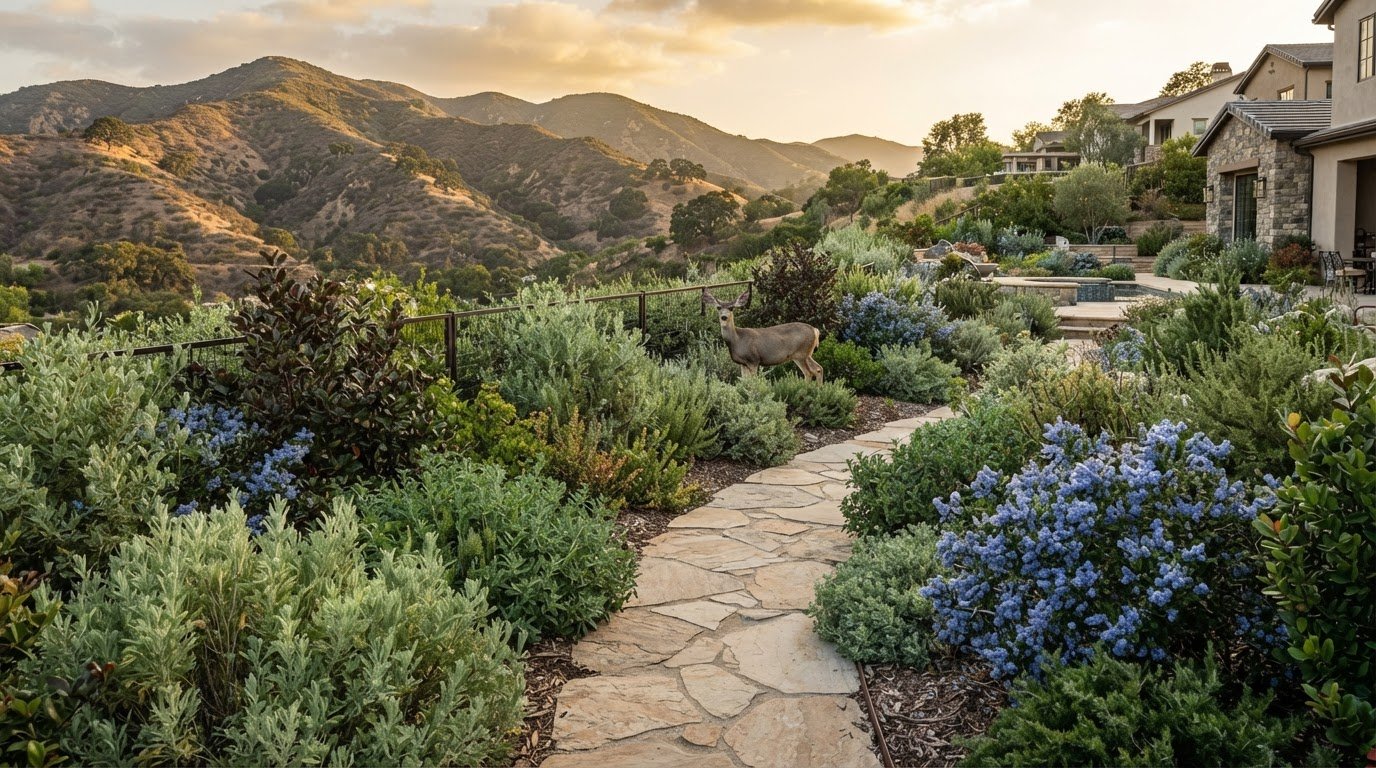
Agoura Hills Deer-Resistant Shrub List: Local Picks and Planting Tips
What if the best defense against deer browsing isn’t a single “deer-proof” shrub, but a planting plan shaped around your site? Repeated browsing can undo the care you’ve put into a garden, and generic plant lists may overlook Agoura Hills’ local conditions. This Agoura Hills deer resistant shrub list offers a practical starting point, with candidates such as California lilac, juniper, and black sage to consider for a more resilient landscape.
A deer-resistant label isn’t a guarantee. It generally means a plant is less palatable, and hungry deer may browse shrubs they usually avoid. In this guide, you’ll learn how to weigh that risk alongside each plant’s growing needs, then use thoughtful placement and a climate-aware design to reduce avoidable damage. The goal is a garden that feels considered and inviting, with realistic expectations for life alongside local wildlife.
Key Takeaways
- Use the Agoura Hills deer resistant shrub list as a starting point, then narrow it to shrubs that suit your garden’s conditions.
- Track where and when browsing occurs to spot patterns that can guide plant placement and protection.
- Compare sun exposure and soil before grouping shrubs, so each planting area suits the plants selected for it.
- Layer different heights, textures, and seasonal interest to create a composed garden rather than a single-species barrier.
Agoura Hills Deer-Resistant Shrubs: A Local Shortlist to Consider
Start with five California native candidates: California sagebrush (Artemisia californica), Cleveland sage (Salvia clevelandii), California lilac (Ceanothus species), toyon (Heteromeles arbutifolia), and coffeeberry (Frangula californica). Their regional character makes them worth considering for Agoura Hills, but “deer-resistant” means less appealing to deer, not safe from browsing.
A thoughtful Agoura Hills deer resistant shrub list accounts for more than a plant label. Fragrance, leaf texture, and adaptation to local conditions can inform selection, but none reliably predicts what deer will eat in every garden. Species and cultivar matter too, especially when comparing mature size and growing needs.
For a broader look at shrub choices, watch this video:
Which native shrubs may suit an Agoura Hills garden?
Use these options as a shortlist, then match the particular species or cultivar to your site’s light, soil, and available space. California sagebrush and Cleveland sage bring aromatic foliage; toyon and coffeeberry offer different leaf forms and structure. California lilacs vary by species, and Ceanothus integerrimus (Deer Brush) is one native example to explore.
- California sagebrush: Consider its fine-textured foliage for a naturalistic planting.
- Cleveland sage: Its fragrant leaves add sensory interest.
- California lilac: Compare species and cultivars rather than assuming one size or form.
- Toyon and coffeeberry: Consider their distinct foliage and structure when shaping a layered planting.
Before choosing, look up each plant’s mature dimensions, local suitability, and water and light needs using California Native Plant Society or Calscape guidance. Check the particular species or cultivar rather than relying on a general description. Deer preferences vary, so don’t treat fragrance, texture, or native status as a guarantee. A site-aware mix can still create a composed, climate-conscious garden.
Why Deer Browse Agoura Hills Gardens, and How to Limit Damage
A shrub’s reputation is only one part of the story. Deer may browse plants they usually avoid when preferred food is scarce, and their choices can shift with the season, available forage, and conditions around your property. Resistance lowers the likelihood of damage; it doesn’t make a plant untouchable.
Are deer-resistant shrubs ever deer-proof?
No. A plant label can’t guarantee deer will leave a shrub alone. Treat it as a guide to relative palatability, not a promise of complete protection. Track which plants are browsed, where the damage appears, and when it happens. These observations can help you refine your planting plan over time.
Newly planted shrubs may be especially vulnerable while they establish. Consider temporary physical protection for young or repeatedly browsed plants. Note whether damage is concentrated along the property edge, near a route deer use, or in a particular exposed area. Mature plants may fare differently, but growth alone doesn’t ensure browsing will stop.
Look at the wider setting, too. Nearby food sources may influence which plants deer choose, while seasonal changes can alter what’s available. If a favorite shrub is repeatedly damaged, try positioning future plantings closer to the home and reserving more exposed areas for options that have fared better on your site. This is thoughtful placement, not a guaranteed deterrent.
Use your observations to shape an Agoura Hills deer resistant shrub list around actual site conditions rather than relying on a generic ranking. A well-planned layout can balance browsing pressure with the garden’s form and daily use. Custom landscape planning can bring plant choices, site conditions, and your vision together in a cohesive design.
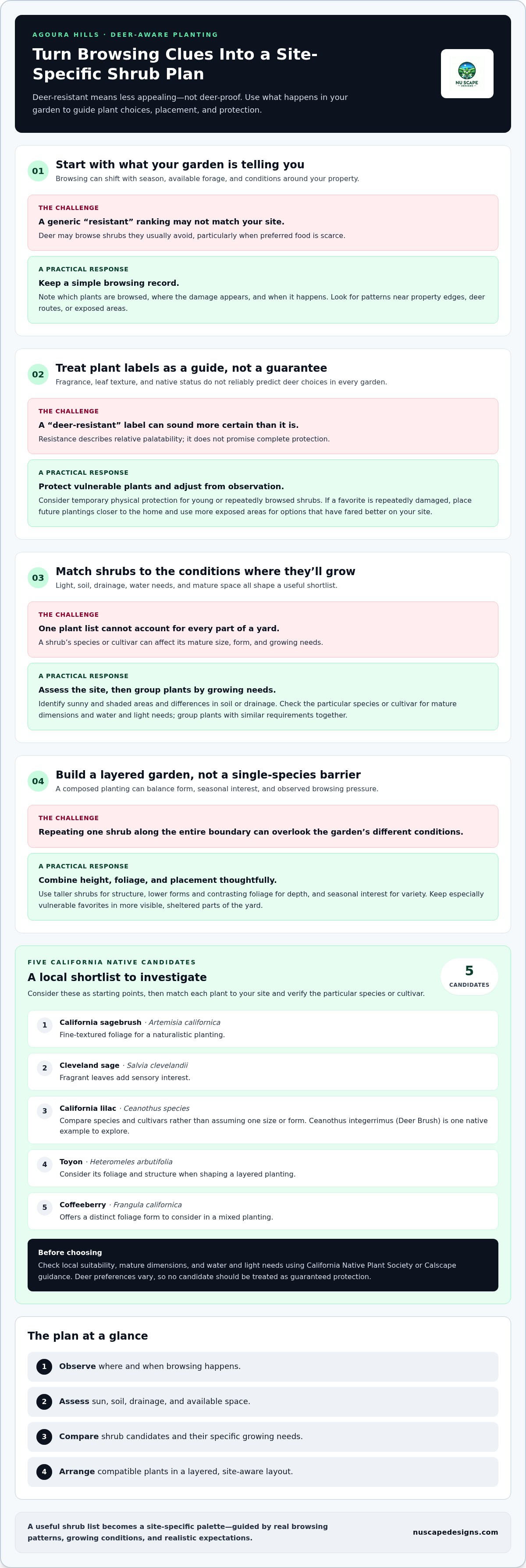
Build a Thoughtful Deer-Resistant Shrub Plan for Agoura Hills
A considered planting plan starts with the property, not a fixed list. Use what you’ve observed about browsing to guide plant placement, then match shrub choices to the conditions where they’ll grow. A locally adapted composition can feel layered and welcoming rather than like a uniform barrier.
- Observe browsing: Note where damage appears and which areas seem less affected.
- Assess sun and soil: Identify sunny and shaded spots, along with differences in drainage or soil conditions across the yard.
- Shortlist candidates: Compare suitable shrubs with those site conditions and the space each plant will need as it matures.
- Group by growing needs: Arrange plants with similar light and water requirements together for a coherent, climate-aware layout.
Composition matters. Taller shrubs can establish structure, while lower forms and contrasting foliage add depth and texture. Seasonal interest can bring the garden to life at different times of year. Rather than repeating one shrub along the entire boundary, combine plants thoughtfully and keep especially vulnerable favorites in more visible, sheltered parts of the yard.
How can a custom planting layout balance beauty and browsing pressure?
Nu Scape Designs plans plant selection and layout around the property, local climate, and homeowner’s vision. This allows the design to account for browsing patterns while shaping a drought-tolerant, low-maintenance landscape, without promising deer-proof results. For more regional ideas, explore California landscape design and drought-tolerant planting ideas as you refine your plan.
The Agoura Hills deer resistant shrub list is most useful when it becomes a site-specific palette, not a rigid recipe. A custom landscape plan from Nu Scape Designs can bring those choices together with the garden’s form, function, and atmosphere.
Shape a Garden That Grows With Your Home
Let your next planting decision begin with the way you want to live outdoors. A useful Agoura Hills deer resistant shrub list is a starting point, but a garden’s character comes from choosing plants that suit the property and arranging them with intention. As the landscape takes shape, keep noting what thrives and where deer tend to browse, then use those observations to guide future choices.
Nu Scape Designs brings custom plant selection and layout together with the homeowner’s vision. Owner and lead designer Donna Hamner’s 30+ years of design experience inform landscapes planned for Southern California conditions, with a thoughtful balance of beauty and function.
Give your garden room to become more personal, cohesive, and connected to its setting.
Start planning a landscape that reflects your home, your outdoor routines, and the conditions of your site with Nu Scape Designs.
Frequently Asked Questions
Are any shrubs completely deer-proof?
No. “Deer-resistant” describes a relative tendency, not immunity; limited forage or local preferences can still lead to browsing. For a useful Agoura Hills deer resistant shrub list, treat the label as an initial filter, then note which plant parts are nipped and whether damage returns after new growth. Dated photos can help distinguish occasional browsing from a persistent pattern.
When is the best time to plant shrubs in Agoura Hills?
Fall is often a useful planting window in Mediterranean-climate gardens, giving many shrubs time to establish before warmer, drier weather. The right timing still depends on the species and current conditions. Follow planting guidance for each shrub, avoid working with unsuitable soil or extreme weather, and plan appropriate watering while new roots establish.
Can deer-resistant shrubs also support pollinators?
Yes, some flowering shrubs can offer nectar or habitat while being less appealing to deer than other plants. Their value depends on species, bloom period, and local growing conditions. Look for regional guidance on both pollinator benefits and plant suitability, then consider how flowering times overlap. This can help create interest across the seasons without relying on a single shrub type.
Will planting deer-resistant shrubs keep deer away from the rest of my garden?
No. Shrub selection won’t reliably stop deer from crossing a yard or protect neighboring plants. Treat it as one part of your planting approach, and consider targeted protection for young or especially valued plants. In Agoura Hills, Ventura, Oxnard, Westlake Village, Calabasas, Malibu, North Simi Valley, Lake Sherwood, Agoura Hills, Sherman Oaks, and Porter Ranch, a layout should reflect each property’s access and growing conditions.