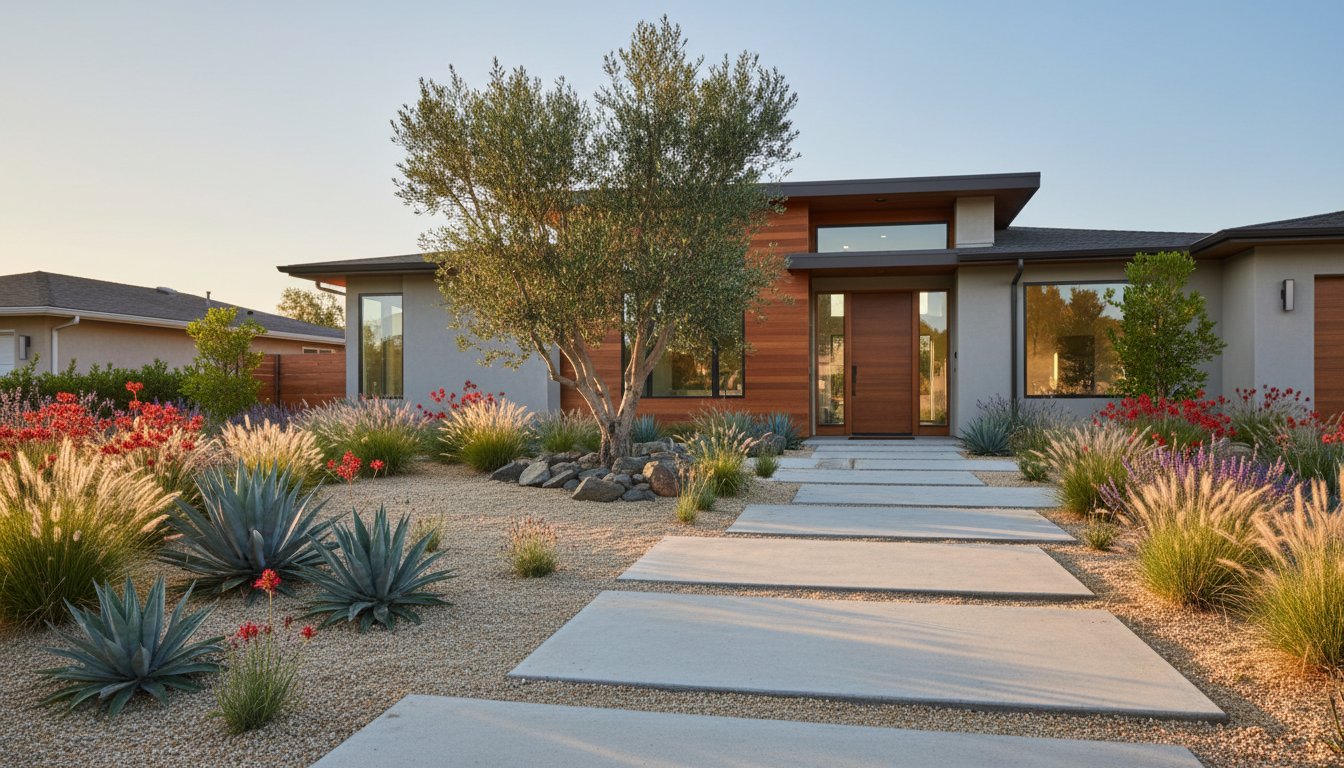
15 No-Lawn Front Yard Landscaping Ideas for a Stunning, Water-Wise Home
Are you tired of watching your water bill climb every summer, all for a thirsty patch of grass that demands constant mowing and maintenance? For many Southern California homeowners, the traditional lawn feels more like a chore than a joy. The thought of removing it can be daunting, sparking fears of a barren, rocky yard or a messy, unkempt space. But a stunning, low-maintenance landscape is not only possible, it’s a practical and beautiful solution. That’s why we’ve compiled these 15 no lawn front yard landscaping ideas to prove that you can have incredible curb appeal without the grass.
In this guide, you will discover functional, climate-appropriate alternatives designed specifically for our region. We'll show you how to create a cohesive and vibrant front yard that lowers your water bills, gives you back your weekends, and supports local pollinators. Get ready to design an outdoor space that finally works as beautifully as it looks, saving you time and money for years to come.
Key Takeaways
- Replacing your grass is a practical long-term investment that saves significant water, time, and money, which is critical in the Southern California climate.
- Discover a range of no lawn front yard landscaping ideas, from soft, natural meadowscapes to modern, minimalist designs that complement your home's architecture.
- Learn how to transform your front yard from a simple viewing area into a functional outdoor living space, such as a private courtyard or welcoming entryway garden.
- A successful lawn-to-landscape conversion starts with a thoughtful plan; understand the key steps to ensure a cohesive and beautiful result that lasts.
Why Ditch the Front Lawn? The Practical Case for Going Grass-Free in SoCal
For decades, the lush green lawn was a symbol of success. In Southern California, however, that ideal has become a significant liability. Traditional turf is the single most irrigated 'crop' in the United States, a reality that simply doesn't align with our arid climate. The good news is that moving away from grass isn't a sacrifice; it's a strategic upgrade. Embracing a grass-free design is an opportunity to gain a front yard that is more functional, valuable, and uniquely beautiful. Let's explore the practical reasons why so many homeowners are exploring smart no lawn front yard landscaping ideas.
Save Water, Save Money
The numbers are clear: a typical lawn can consume over 50% of a household's water during summer months. In contrast, a thoughtfully designed, water-wise landscape can reduce that usage by as much as 80%. This approach, often referred to as Xeriscaping, focuses on climate-appropriate plants and efficient irrigation. Many local water districts even offer significant financial rebates for turf removal, making the transition more affordable. The result is a dramatic and permanent reduction in your monthly utility bills-a smart investment with long-term value.
Reclaim Your Weekends
A lawn is a relentless commitment. Your weekends can quickly disappear under a mountain of chores that never truly end. Contrast the high-maintenance routine of traditional turf with the minimal upkeep of a well-planned, no-lawn landscape.
- Typical Lawn Care: Constant mowing, seasonal fertilizing, persistent weeding, aerating, and pest control.
- Low-Maintenance Landscape: Occasional pruning, refreshing mulch once a year, and checking the drip irrigation system.
This shift gives you back your most valuable asset-time. You can spend your weekends enjoying your outdoor space, not just working on it.
Boost Curb Appeal and Biodiversity
A generic lawn makes a home blend in; a custom, no-lawn design makes it stand out. A landscape filled with varied textures, colors, and forms has far more character than a flat, green rectangle. By incorporating native and climate-appropriate plants, you also create a vibrant habitat that attracts local birds, bees, and butterflies, adding life and movement to your yard. This thoughtful approach not only enhances curb appeal but also increases property value by creating a functional and beautiful outdoor space that works with the Southern California environment.
Idea Showcase 1: Natural & Lush Meadowscapes
One of the most functional and beautiful no lawn front yard landscaping ideas is the meadowscape. This approach swaps a uniform turfgrass for a soft, layered, and naturalistic design filled with a thoughtful mix of grasses, perennials, and wildflowers. The goal is to create a dynamic space that celebrates movement, texture, and evolving seasonal color. The first crucial step in this transformation is removing the existing lawn; the University of California provides expert guidance on various lawn removal methods to ensure you start with a clean slate.
A common misconception is that a naturalistic garden is messy. With proper planning and a cohesive design, a meadowscape is an intentional and low-maintenance landscape that works beautifully for your home and the local environment.
The California Native Garden
This approach creates a landscape that is perfectly in tune with the Southern California climate. By using plants that are naturally adapted to our local conditions, you ensure a yard that is exceptionally drought-tolerant and requires minimal upkeep. This creates a cohesive look that blends seamlessly with the region's natural beauty. Key plants for this style include:
- Ceanothus (California Lilac): Offers stunning blue flowers and attracts essential pollinators.
- Manzanita: Provides strong, year-round structure with its iconic sculptural branches.
- Salvias (Sages): A diverse group of plants prized for their fragrant foliage and long blooming periods.
The Pollinator Paradise
A pollinator paradise is a functional garden designed specifically to attract and support bees, butterflies, hummingbirds, and other beneficial wildlife. This design brings your front yard to life, creating a vibrant, active ecosystem. To achieve this, select a succession of flowering plants like Yarrow, native Buckwheat, and Penstemon to provide a consistent nectar source. Incorporating a small, shallow water source like a bird bath makes your garden a complete and supportive habitat.
The Ornamental Grass Meadow
For a design that prioritizes texture, sound, and movement, an ornamental grass meadow is an outstanding choice. This style uses large, intentional drifts of low-water grasses to create a soft, flowing effect that sways gracefully in the breeze. Foundational, climate-appropriate species like Deer Grass (Muhlenbergia rigens) or Blue Fescue form the backbone of the design. Weaving in tough perennials like Kangaroo Paw or Lavender provides pops of contrasting color and form.
Idea Showcase 2: Modern & Minimalist Designs
For homes with contemporary or mid-century modern architecture, a minimalist front yard creates a powerful, cohesive statement. This approach follows a ‘less is more’ philosophy, emphasizing clean lines, bold geometric forms, and a thoughtful interplay between structural plants and hardscaping materials. These modern no lawn front yard landscaping ideas prioritize high-impact visuals and low-clutter functionality. A well-executed minimalist design doesn't just reduce maintenance; a thoughtful plan can dramatically improve the curb appeal of a home by creating a polished, intentional look. Key materials in this style include concrete, steel, gravel, and stone.
Decomposed Granite (DG) & Boulders
Replacing a thirsty lawn with decomposed granite (DG) provides a clean, permeable surface that feels both natural and structured. DG offers a soft, neutral canvas that makes other elements pop. To add drama and dimension, incorporate a few strategically placed large boulders. These act as powerful focal points and can even double as rustic, informal seating. Pair this combination with a few striking, sculptural plants like Agave or Yucca for a water-wise design that is both bold and functional.
Architectural Plants & Concrete Pavers
One of the most effective no lawn front yard landscaping ideas for a modern look involves a geometric layout of large-format concrete or stone pavers. Create intentional pathways or a simple patio space, leaving wide gaps between the pavers. These gaps can be filled with a contrasting material like dark grey gravel or a durable, flat groundcover such as Dymondia. The final touch is adding architectural plants with strong forms, such as:
- New Zealand Flax (Phormium) for upright, colorful blades
- Tree Aloes (Aloidendron) for sculptural height
- Blue Chalksticks (Senecio) for a low-growing, silvery-blue mat
The Zen-Inspired Rock Garden
For the ultimate in low-maintenance design, a Zen-inspired garden offers a serene, contemplative space. This style uses raked gravel or sand to represent water, with select boulders arranged to symbolize islands or mountains. Planting is extremely sparse and deliberate, focusing on form and texture. A single, beautiful Japanese Maple in a protected spot or a simple border of dark green mondo grass is often all that’s needed to provide a touch of living color and softness to the hardscape.
Idea Showcase 3: Functional & Livable Front Yards
Your front yard doesn't have to be a passive, ornamental space viewed only from the street. One of the most rewarding no lawn front yard landscaping ideas is to transform this area into an active, functional extension of your home. By creating usable outdoor ‘rooms,’ you can add valuable living space for relaxing, entertaining, or even growing your own food. This approach focuses on making your landscape work for you, blending beauty with practical, day-to-day utility.
The Front Courtyard or Patio
Imagine enjoying your morning coffee in a private front courtyard. Using materials like pavers or decomposed granite (DG), you can create a durable and welcoming seating area. To achieve a sense of enclosure and privacy from the street, incorporate a low stucco wall or a dense, layered planting of shrubs and grasses. A simple bubbling water feature or a collection of stylish container pots can add the perfect finishing touch and ambiance.
The Edible Front Yard
An edible garden is a fantastic way to create a landscape that is both productive and beautiful. Integrate raised beds made from wood or modern Corten steel to grow vegetables and herbs in an organized, accessible way. Thoughtfully mix in ornamental edibles like artichokes with their dramatic foliage, fragrant rosemary bushes, or even a dwarf citrus tree. This approach turns your front yard into a conversation piece that connects you directly with your food source.
The Dry Creek Bed
For homes in Southern California, managing rainwater efficiently is a common challenge. A dry creek bed is a beautiful and functional solution. It directs water flow during storms, preventing erosion and pooling, while adding immense visual interest year-round. We design these features with a mix of river rocks and boulders to mimic a natural stream, lining the edges with climate-appropriate, water-wise plants that thrive in well-drained soil.
The key to success with these functional spaces is thoughtful planning. A good design is key to making a front yard feel both private and welcoming. See how we plan functional spaces.
Planning Your Lawn-to-Landscape Conversion
Moving from inspiration to installation is an exciting step. But a successful, low-maintenance landscape doesn’t happen by chance-it begins with a solid plan. Thoughtful planning is the single most effective way to avoid costly mistakes, ensuring your new front yard is not only beautiful but also functional and sustainable for years to come.
Step 1: Assess Your Site and Needs
Before you buy a single plant or paver, take a detailed look at your property. Understanding your site's unique conditions is the foundation of a successful design. A thorough assessment prevents common problems like placing sun-loving plants in deep shade or creating unintended drainage issues.
- Environment: How many hours of direct sun does the area get? Is your soil sandy, clay, or loam? Are there significant slopes to consider for water runoff?
- Function: What is your primary goal? Are you aiming for a purely aesthetic, low-maintenance design, or do you want to include a functional space like a patio or seating area?
- Budget: What is your realistic budget for both the design phase and the full installation? Knowing this upfront helps guide material and plant choices.
Step 2: Choose a Style and Materials
With your site assessment complete, you can focus on creating a cohesive look that complements your home’s architecture. The best no lawn front yard landscaping ideas feel like a natural extension of the house. Select a theme-such as modern, cottage, or Mediterranean-and then build a palette of hardscape materials (like gravel, pavers, or stone) and climate-appropriate plants that support it. Focus on drought-tolerant plants with varied textures, colors, and sizes to create year-round interest.
Step 3: Why a Professional Design is Crucial
This is where your vision becomes an actionable blueprint. A professional landscape designer translates your goals, site analysis, and style preferences into a detailed plan. This document is far more than a simple sketch; it specifies materials, plant placement, irrigation, and construction details, ensuring the final result is functional and built to last.
Looking at the work of seasoned experts can provide excellent inspiration for your own project; for instance, you can visit Tri-My-Landscapes LTD to see how a family-run business with over 21 years of experience creates high-quality, professional landscapes.
A detailed design plan is also essential for getting accurate, comparable bids from landscape contractors. It ensures everyone is quoting the same project, which protects you from unexpected costs. Ultimately, investing in a professional plan is the key to transforming your vision into a beautiful, water-wise landscape that adds long-term value to your home. If you're ready to create an outdoor space that works beautifully, we can help you build the right plan.
Your Functional, Beautiful Front Yard Awaits
As we've explored, replacing a thirsty lawn is one of the most impactful decisions a Southern California homeowner can make. It's a choice that saves water, reduces maintenance, and unlocks incredible design potential. From the wild beauty of a native meadowscape to the clean lines of a modern gravel garden, these no lawn front yard landscaping ideas prove that you can achieve stunning curb appeal without the constant upkeep. The key is to create a functional, cohesive space that reflects your style and works in harmony with our climate.
Turning that vision into a practical, long-lasting reality requires thoughtful planning. At Nu Scape Designs, we specialize in creating custom, low-maintenance landscapes designed specifically for Southern California's unique climate. We focus on a seamless blend of function, beauty, and water conservation, ensuring your outdoor space works as beautifully as it looks. Our expert planning process is designed to help you avoid common, costly installation mistakes and create a landscape that delivers value for years to come.
Frequently Asked Questions About No-Lawn Front Yards
How much does it cost to remove a lawn and install a new landscape?
The cost varies significantly based on the size of your yard, the removal method, and the complexity of your new design. A simple DIY sheet mulching project may cost a few hundred dollars in materials. Professional removal and installation, which can include new irrigation, hardscaping, and mature plants, is a significant investment, often ranging from $15 to $35+ per square foot. Thoughtful planning is key to managing the budget and ensuring long-term value for your property.
Will replacing my lawn with a garden lower my property value?
On the contrary, a professionally designed, water-wise front yard can significantly increase your property's value and curb appeal, especially in Southern California. A thoughtful, low-maintenance landscape signals to potential buyers that the home is well-cared-for and efficient. It reduces water bills and appeals to modern tastes for sustainable, functional outdoor spaces. The key is a cohesive, well-executed design, not simply an unkempt patch of dirt and weeds.
What do I need to know about HOA rules for lawn-free yards?
Before starting any work, you must review your Homeowner Association’s guidelines. Many HOAs now encourage drought-tolerant landscapes but may have specific rules about approved plant lists, ground cover materials (e.g., mulch vs. rock), and maintenance standards. Submitting a clear design plan for approval beforehand is the most effective way to avoid costly misunderstandings. This proactive step ensures your project is both beautiful and compliant from the start.
What is the best way to remove an old grass lawn?
The best method depends on your timeline and budget. For an eco-friendly approach that also builds healthy soil, sheet mulching is an excellent option, though it takes several months to kill the grass. For a much faster result, a sod cutter can be rented or used by a professional contractor to physically remove the turf in a day or two. Each method has its pros and cons, and the right choice depends entirely on the specific goals of your project.
How long will a lawn conversion project typically take?
A full lawn conversion timeline depends on the removal method and design complexity. If you choose sheet mulching, you should plan for 3-6 months for the lawn to decompose before you can plant. A project using a sod cutter for removal, followed by professional installation of plants and irrigation, might take anywhere from two to six weeks from start to finish. Proper planning is the most critical factor for an efficient and predictable project timeline.
Can I still have some green without a traditional lawn?
Absolutely. There are many excellent no lawn front yard landscaping ideas that provide a lush, green appearance with a fraction of the water. Consider drought-tolerant groundcovers like Dymondia or Kurapia for a flat, walkable green space. You can also create a layered, vibrant look using climate-appropriate ornamental grasses, deep green succulents, and flowering evergreen shrubs. A functional and beautiful green space is entirely achievable without a traditional, thirsty lawn.