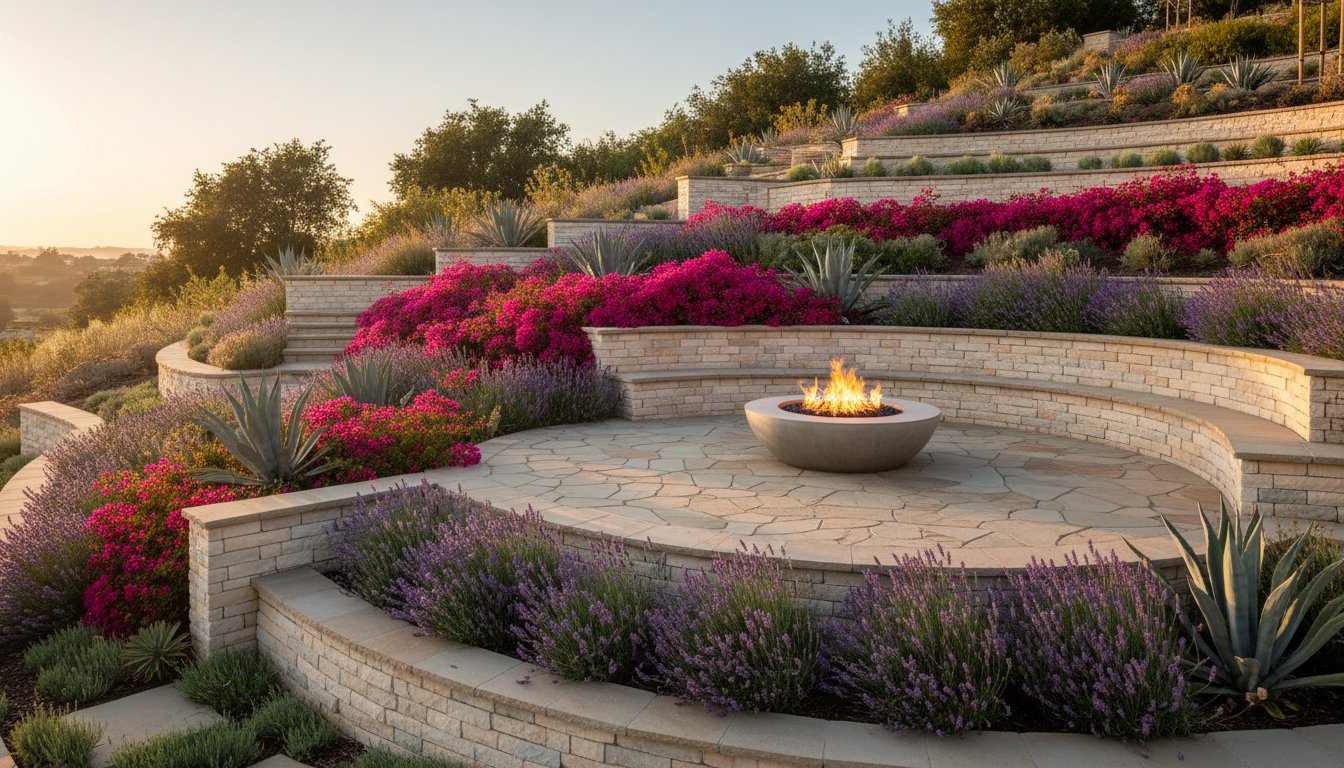
15 Drought-Tolerant Landscaping Ideas for Hillsides: A Designer's Guide
That steep slope on your property can feel like a constant source of frustration. If you're tired of watching soil erode with every rain, wasting water on runoff, or dealing with a space that's unusable and difficult to maintain, you are not alone. Many Southern California homeowners view their hillsides as a problem to be managed rather than an asset to be enjoyed. The good news is that your hillside holds incredible potential for both beauty and stability, and achieving it doesn't require a high water bill or endless upkeep.
This designer's guide provides practical, effective solutions. We are sharing 15 drought tolerant landscaping ideas for hillsides specifically chosen to address erosion, reduce maintenance, and create stunning visual appeal in our unique climate. You will discover how to select the right plants, implement thoughtful hardscaping, and finally transform that challenging incline into a functional, water-wise garden that provides long-term value. Let’s explore how to create an outdoor space that works as beautifully as it looks.
Key Takeaways
- A solid plan is your most critical tool for managing hillside challenges like erosion and water runoff, preventing costly future repairs.
- Learn how structural elements like retaining walls and terraces create stable, usable levels on a steep slope, providing the foundation for your design.
- The most effective drought tolerant landscaping ideas for hillsides use plants with deep, fibrous root systems to actively bind the soil and prevent erosion.
- Move beyond simple groundcover by incorporating functional elements that turn a challenging slope into a valuable and beautiful outdoor space.
First, Plan: Key Considerations Before Landscaping a Hillside
Tackling a sloped yard without a thoughtful plan is one of the most common and costly landscaping mistakes we see. Hillsides present unique functional challenges, from soil erosion and water runoff to difficult maintenance access. However, these challenges are also opportunities. A well-designed slope can become a dynamic, multi-level garden that is both stunning and stable. The key is focusing on long-term stability and water management from day one.
To visualize how water-wise concepts can transform a space, this video provides some excellent examples:
Assess Your Slope's Conditions
Before you can choose a single plant, you must become an expert on your specific site. A thorough assessment prevents guesswork and is the foundation for creating functional and beautiful drought tolerant landscaping ideas for hillsides that will thrive for years to come. Start by documenting these key factors:
- Grade: Determine how steep your hill is. A gentle slope may only need strategic planting, while a steep grade will likely require terracing or retaining walls for stability.
- Sun and Shade: Map how the sun travels across the slope throughout the day and seasons. A south-facing slope in Southern California will need vastly different plants than a shaded, north-facing one.
- Existing Conditions: Identify what’s already there. Are there mature trees to preserve? Bare patches prone to erosion? Weeds that indicate specific soil issues?
- Access Points: Plan how you will access the area for planting and future low-maintenance care. Incorporating pathways or step stones now will save significant effort later.
Analyze Soil and Drainage
On a hillside, water is a powerful force that can be your greatest ally or your worst enemy. Understanding your soil and how water moves across it is non-negotiable. Start by identifying your soil type-heavy clay holds water but can become unstable, while sandy soil drains too quickly. Observe your slope during rain if possible. Where does water pool? Where does it rush and cause erosion?
Poor drainage can undermine expensive hardscaping and wash away your investment in plants. A successful plan doesn't just fight runoff; it manages it. This approach, central to Xeriscaping principles, involves using swales, terraces, and the right plants to slow water down, allowing it to soak into the ground where it’s needed most. This creates a resilient, water-wise landscape that works with nature, not against it.
Structural & Hardscape Ideas to Tame Your Slope
While water-wise plants are essential, the most successful and lasting drought tolerant landscaping ideas for hillsides begin with a solid structural foundation. Hardscaping provides the essential 'bones' for your design, physically preventing soil erosion, managing water runoff, and creating valuable, usable space on a challenging grade. Thoughtful planning ensures these elements provide long-term value and integrate seamlessly with your home's architectural style for a cohesive, functional, and beautiful result.
Idea 1: Tiered Terraces for Usable Levels
Breaking up a long, continuous slope into a series of smaller, level terraces is a classic and highly effective solution. This approach transforms an unusable incline into a series of functional garden beds or intimate patios. These new planting beds are perfect for grouping plants with similar water needs, and you can find excellent climate-appropriate options in this official California drought-tolerant planting guide. Terracing dramatically improves water absorption, allowing precious rainfall to soak into the soil rather than running off.
- Best For: Creating multiple planting zones or small, level seating areas.
- Material Options: Natural stone, timber, or interlocking concrete blocks.
Idea 2: Retaining Walls for Strength and Style
For more significant grade changes, a well-built retaining wall is an indispensable tool. Whether you use a single, taller wall for a short slope or a series of shorter walls to create terraces, their primary job is to hold back soil and stop erosion in its tracks. A properly engineered wall is a permanent investment in the stability of your landscape. For expert construction of these features, Wright Carpentry offers professional services for retaining walls and structural carpentry. Always check local building codes, as walls under four feet in height may not require a permit, simplifying the installation process.
- Best For: Preventing soil slippage and defining level spaces.
- Material Options: Stacked stone, concrete blocks with a stucco or veneer finish, or large boulders for a naturalistic look.
Idea 3: Natural Stone Steps and Winding Pathways
A beautiful slope is useless if you can't access it safely. Integrating steps and pathways is crucial for both function and aesthetics. A meandering path, rather than a straight one, is visually more interesting and serves a practical purpose: it slows the flow of water during rain, reducing its erosive force. Combining hard materials with soft, creeping groundcovers between stones creates a more natural, integrated appearance that blends your hardscape and softscape beautifully.
- Best For: Providing safe, attractive access and adding visual interest.
- Material Options: Flagstone, decomposed granite, or permeable gravel.
Planting Strategies for a Lush, Low-Water Hillside
Beyond simply choosing the right plants, how you plant them is critical for long-term success and stability. The right strategies turn a challenging slope into a functional, cohesive, and beautiful landscape. Plants are your most powerful ally in preventing erosion; their roots act as a natural net, binding the soil together. For maximum impact, focus on species with deep, fibrous root systems that anchor soil effectively.
Thoughtful planning also involves grouping plants with similar water needs, a practice known as hydrozoning. This ensures efficient irrigation and prevents overwatering some plants while others thirst. By layering taller shrubs, mid-size perennials, and low-growing groundcovers, you create a rich, textured appearance that mimics a natural hillside and provides comprehensive soil coverage. These are the foundational principles behind the best drought tolerant landscaping ideas for hillsides.
Idea 4: Mass Planting with Groundcovers
One of the most cost-effective and low-maintenance solutions is to create a "living carpet" with mass plantings of tough, spreading groundcovers. These plants quickly cover bare ground, effectively suppressing weed growth and holding topsoil in place during rain. For visual interest, combine different textures and colors, such as the fine, silvery foliage of Dymondia margaretae with the vibrant flowers of a trailing Lantana. This approach delivers a beautiful, unified look with minimal upkeep.
Idea 5: A Mediterranean or Rock Garden
Embrace the natural slope by designing a Mediterranean-style rock garden. This is one of the most popular drought tolerant landscaping ideas for hillsides because it provides excellent drainage-a key requirement for many water-wise plants. Strategically place larger boulders to serve as visual anchors and to create stable planting terraces. The gaps are perfect for succulents, ornamental grasses like Blue Fescue, and hardy herbs such as Rosemary and Lavender, which thrive in the warm, dry conditions found in Southern California.
Idea 6: Planting in Pockets and Crevices
For slopes that incorporate retaining walls or large boulders, take advantage of the small gaps and crevices. Tucking plants into these pockets creates a stunning, aged look as they cascade over the stone. This technique is ideal for trailing succulents, sedums, and creeping thyme. These small pockets offer a unique microclimate, retaining moisture longer after watering and protecting delicate roots from the sun, allowing hardy plants to establish themselves in what seems like an impossible location.
Top Plant Selections for Southern California Slopes
Choosing the right plant for the right place is always important, but on a hillside, it is absolutely critical. The goal is a landscape that is both beautiful and functional-one that stabilizes the soil, requires minimal water, and provides long-term value. The best drought tolerant landscaping ideas for hillsides rely on proven performers that thrive in our specific Southern California climate. By focusing on California natives and other Mediterranean plants, you can create a resilient and cohesive design.
A successful slope planting combines different forms, textures, and bloom times for year-round visual interest and ecological benefit. Here are some of our top, climate-appropriate selections organized by their function in the landscape.
Best Groundcovers for Erosion Control
These low-growing, spreading plants are your first line of defense. Their dense root systems act like a net, holding soil in place while their foliage shades the ground to conserve moisture.
- Trailing Rosemary (Rosmarinus officinalis 'Prostratus'): A tough, aromatic workhorse that spills beautifully down slopes. It’s extremely low-water once established and its woody structure provides excellent stability.
- Myoporum Parvifolium: This fast-spreading groundcover forms a dense, bright green mat that effectively chokes out weeds and controls erosion. It is fire-retardant and very reliable.
- Ceanothus (groundcover varieties): As a California native, varieties like 'Yankee Point' are perfectly adapted to our climate. They offer beautiful blue flowers in the spring and are a cornerstone of water-wise slope planting.
- Lantana: For a splash of vibrant, long-lasting color, lantana is an excellent choice. It loves the heat, attracts pollinators, and thrives with little care.
Flowering Shrubs & Perennials for Color
Layering in shrubs and perennials adds height, texture, and seasonal color. These plants provide a visual mid-ground between low groundcovers and taller accent plants.
- Lavender (Lavandula): The excellent drainage of a hillside is the perfect environment for lavender. Its fragrant, purple spikes provide classic beauty and require very little water.
- Salvia (Sage): With countless native and Mediterranean varieties, salvias offer a huge range of colors, from the electric blue of 'May Night' to the bright red of Salvia greggii. They are magnets for hummingbirds.
- Rockrose (Cistus): True to its name, this shrub thrives in tough, dry, sunny spots. It produces a profusion of delicate, paper-like flowers and is exceptionally drought-tolerant.
- Bougainvillea: While technically a vine, bougainvillea can be trained to scramble over slopes and retaining walls, providing a massive and dramatic display of color with minimal water.
Architectural Accents with Succulents & Grasses
For bold structure and year-round interest, nothing beats the dramatic forms of succulents and the soft textures of ornamental grasses. They are essential components for modern, low-maintenance hillsides.
- Agave & Aloe: These succulents provide strong, sculptural focal points. Their dramatic shapes create a stunning contrast against softer plantings.
- Blue Fescue (Festuca glauca): The fine, blue-gray foliage of this grass forms neat, tidy clumps that provide excellent texture and color contrast without needing much water.
- Muhly Grass (Muhlenbergia capillaris): In the fall, this grass creates a breathtaking haze of airy pink plumes that catch the light beautifully, adding softness and movement to the landscape.
Thoughtful plant selection is the foundation of a slope that works as beautifully as it looks. Combining these proven plants creates a layered, low-maintenance, and secure landscape. If you need expert help developing a cohesive planting plan for your unique property, learn more about our climate-smart design services.
Advanced Design Concepts for a Show-Stopping Hillside
Once your slope is stabilized with the right plants, it's time to elevate the design from simple coverage to a truly functional and beautiful landscape. These advanced drought tolerant landscaping ideas for hillsides do more than just look good; they solve common problems, create usable space, and add significant long-term value to your property. Thoughtful planning is essential to integrate these elements cohesively, transforming your hillside from a challenge into a destination.
Idea 7: Install a Dry Creek Bed for Drainage
A dry creek bed is a functional work of art. By creating a natural-looking channel of river rock and boulders, you can intelligently direct rainwater down the slope, preventing erosion and protecting your plantings. Even when dry, it provides immense visual interest and a strong design element. For an authentic look, we recommend planting moisture-loving Southern California natives like Juncus or Mimulus along the edges to take advantage of the occasional water flow.
Idea 8: Create a Secluded Destination Point
Give yourself a reason to interact with your hillside garden. Incorporating a small, level landing or a simple flagstone patio partway up the slope creates a destination. Add a sturdy bench or a pair of chairs to establish a quiet retreat. This functional addition not only makes the space usable but also offers a unique vantage point to enjoy the rest of your property. It turns a passive view into an active experience.
Idea 9: Layer Plants for a Natural, Forested Look
To achieve a mature, naturalistic look, think in layers. This classic design technique creates depth and visual interest.
- Back Layer (Top of Slope): Use taller shrubs or small, climate-appropriate trees like Cercis occidentalis (Western Redbud) to create a backdrop.
- Middle Layer: Fill the mid-ground with medium-sized perennials and grasses that provide texture and color.
- Front Layer (Bottom of Slope): Use low-spreading groundcovers to soften edges and tie the entire design together.
This layered approach is one of the most effective drought tolerant landscaping ideas for hillsides to create a full, established appearance from day one.
Integrating features like these requires a cohesive vision to ensure they work together beautifully and function correctly for years to come. If you're ready to transform your challenging slope into a valuable asset, contact Nu Scape Designs for a consultation.
From Challenging Slope to Stunning Landscape
Transforming a steep, thirsty hillside into a beautiful, water-wise garden is entirely achievable with the right strategy. As we've covered, success begins with a solid plan that addresses drainage and soil retention, often using structural solutions like terraces and retaining walls. From there, a thoughtful planting strategy using climate-appropriate selections ensures your slope will thrive, not just survive.
Implementing these drought tolerant landscaping ideas for hillsides not only conserves precious water but also turns a challenging liability into a stunning, functional asset. However, a cohesive design is critical to ensuring every element works together for long-term value and beauty. Planning before you plant is the best way to avoid costly errors.
As specialists in Southern California climate-appropriate design, we create functional and beautiful landscape plans that maximize your property's value. Ready to turn your challenging slope into a beautiful landscape? Get a professional design plan. Your hillside holds incredible potential, and a professional design is the first step to unlocking it.
Frequently Asked Questions
How do you stop soil erosion on a steep hillside?
The most effective strategy to stop soil erosion is to establish plant cover with deep, fibrous root systems. These roots act as a natural net, binding the soil particles together. For severe slopes, a multi-layered approach works best. This includes using jute netting to temporarily stabilize the soil while plants establish, and in some cases, incorporating terracing or small retaining walls to break up the slope and slow water runoff. A thoughtful plan ensures a functional, long-term solution.
What is the most low-maintenance way to cover a slope?
Planting a dense layer of climate-appropriate, drought-tolerant groundcovers is the most functional and low-maintenance solution for covering a slope. Once established, plants like creeping Rosemary, Lantana, or certain types of Ceanothus will outcompete weeds and stabilize the soil with minimal intervention. The key is proper initial planning and plant selection for our Southern California climate, which creates a living carpet that requires very little care, water, or mowing compared to turf grass.
How do you water a drought-tolerant garden on a hillside?
Efficient irrigation is critical on a hillside to prevent runoff and wasted water. A drip irrigation system with pressure-compensating emitters is the best method. This technique delivers water slowly and directly to the root zone of each plant, allowing the soil to absorb it before it can run down the slope. It’s a water-wise approach that ensures your plants get the hydration they need without contributing to erosion, making it a cornerstone of smart hillside landscaping.
Do I need a permit to build a retaining wall in California?
In most Southern California jurisdictions, you will need a permit for a retaining wall over a certain height-typically three to four feet, measured from the bottom of the footing. Rules vary significantly by city and county, and factors like proximity to property lines can also trigger permit requirements. To avoid costly mistakes, it is always best to consult with your local building and safety department before beginning any construction. This ensures your project is both safe and compliant.
What are the best plants to hold soil on a slope?
The best drought tolerant landscaping ideas for hillsides always feature plants with strong, extensive root systems. For Southern California, excellent choices include native shrubs like Sugar Bush (Rhus ovata) and various species of Ceanothus (California Lilac). Spreading groundcovers such as prostrate Rosemary and Myoporum are also highly effective. These plants are adapted to our climate, require minimal water once established, and create a robust root network that securely anchors the soil on your slope.
Can I use mulch on a steep slope or will it wash away?
Yes, you can and should use mulch on a slope, but the type is important. Avoid small, lightweight wood chips that will easily wash away. Instead, opt for a shredded or stringy mulch, often called "gorilla hair." This type of mulch interlocks and mats together, creating a stable layer that resists movement from wind and rain. It is highly effective for retaining soil moisture, suppressing weeds, and preventing erosion while your plants become established.